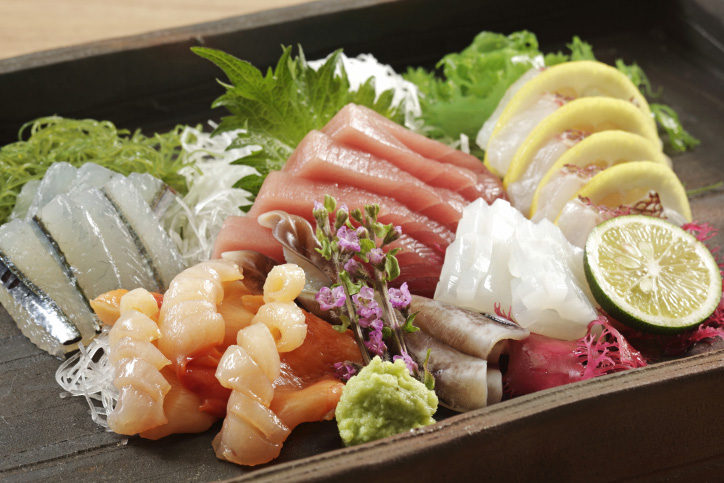
Sashimi is thinly-sliced fresh, raw fish, eaten with soy sauce or other flavorings. It is a well-known Japanese cuisine. With sashimi, the sliced fish is not just laid out plainly. Instead, the fish is arranged beautifully. Other ingredients are placed under the sashimi, such as finely-cut radish, seaweed, and shiso (a Japanese herb from the mint family). These are called sashimi no tsuma (sashimi garnishes). You can eat them but do not have to.
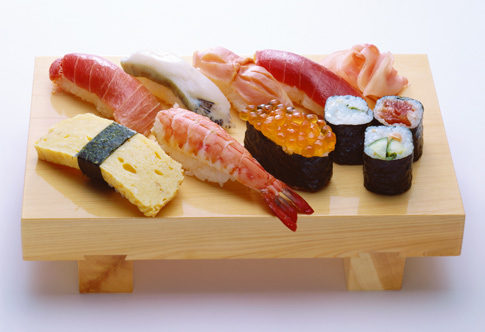
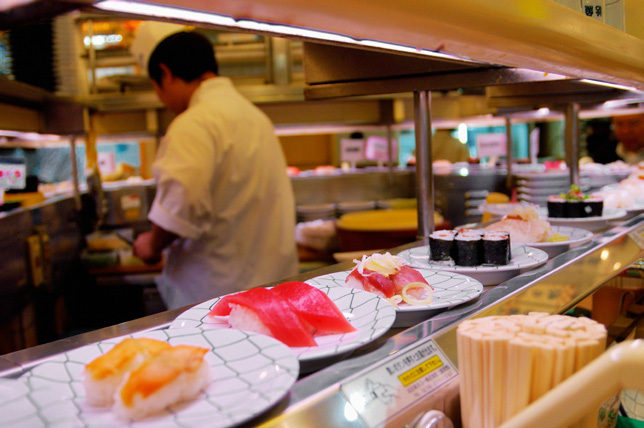
Sushi is sashimi and vinegared rice, and is becoming popular around the world. There are several types of sushi, such as nigiri-zushi (sushi rice shaped by hand and topped with sliced fish), maki-zushi (sushi rice and fillings rolled in a sheet of seaweed), chirashi-zushi (a bowl or box of sushi rice topped with various ingredients), and oshi-zushi (sushi rice with toppings pressed into a frame or box). Sushi may be very expensive if you go to a specialty restaurant, but there are also many inexpensive sushi restaurants. Kaiten-zushi is a type of restaurant where sushi is delivered to customers on a conveyor belt. Sushi is relatively cheap in these restaurants. Sushi is also available at takeout sushi chains, supermarkets, and convenience stores.
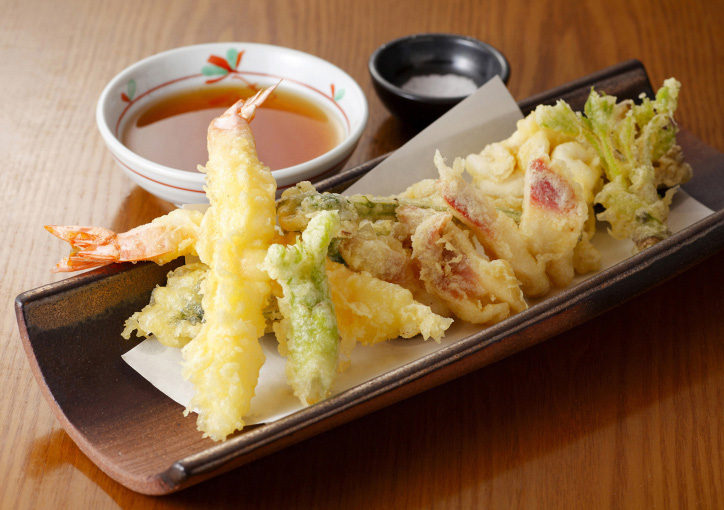
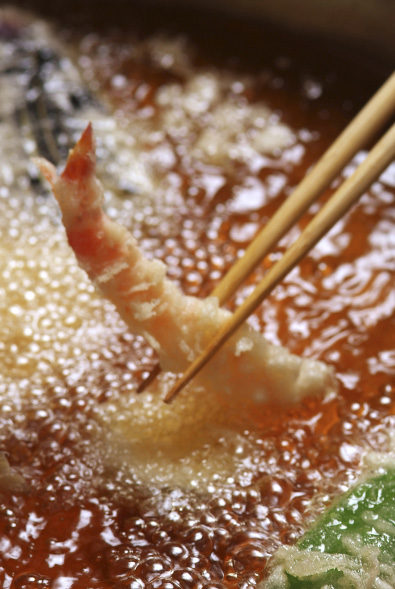
Tempura is made by deep-frying seafood such as shrimp and fish, or vegetables such as pumpkin and eggplant, in batter made from wheat flour. It is a traditional Japanese food. Its name is said to be from the Portuguese word tempero (seasoning). Tempura can be eaten with a dipping sauce or salt. It is also served over rice or noodles such as soba or udon.
Udon and soba are typical Japanese noodles. Udon is made by boiling thick, white noodles made from wheat flour. Soba is a noodle made from buckwheat flour. Both udon and soba can be served in hot soup, or boiled first then chilled in water and served on a plate with a thick dipping sauce.
There are specialty restaurants that serve only udon or soba. However, many soba restaurants offer both udon and soba on their menus, so you can choose. There are udon and soba restaurants in most train stations. They serve noodles cheaply and quickly, and are very convenient when you are in a hurry.
In Japan, people eat noodles such as udon and soba noisily with a slurping sound. This is because slurping the noodles makes them taste better. It is also a way of communicating how delicious the noodles are, through sound instead of words. Why not practice trying to slurp noodles such as udon and soba in this way?
うどん、そばのメニューには、以下のようなものがあります。
Here are some examples of types of udon and soba.
かけうどん/かけそば
具が入っていない、温かいつゆに入ったうどん・そば。
Udon or soba served in a hot soup without any other ingredients.
ざるうどん/ざるそば
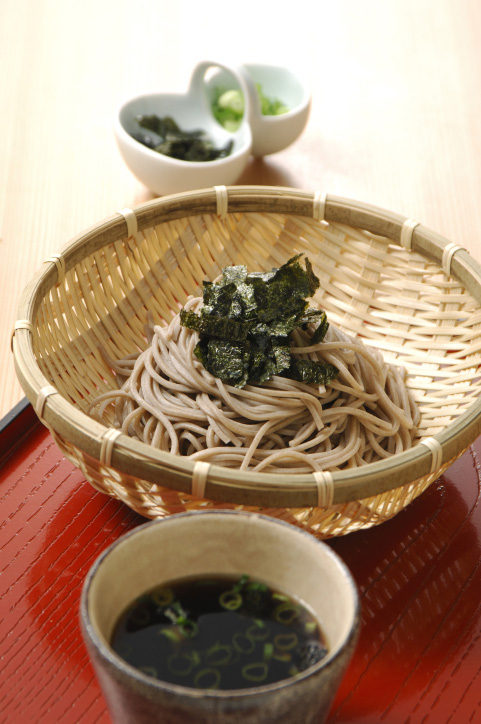
ざるは竹で編んで作った器。水で冷やし、冷たくした麺をざるに盛り、つゆをつけて食べる。
Zaru is a basket made from bamboo. Noodles chilled in water or prepared cold are served in a zaru and eaten with a dipping sauce.
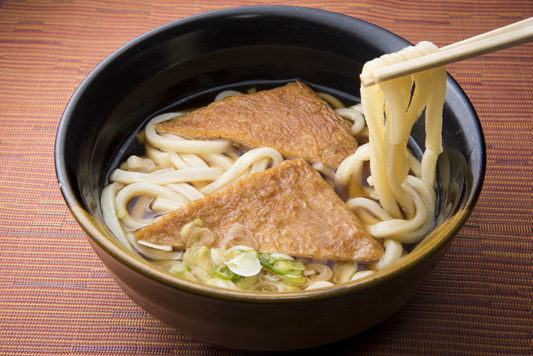
Kitsune means "fox." This udon or soba is topped with deep-fried tofu. In the Kansai region, this udon is called kitsune (fox) while the soba is called tanuki (raccoon dog).
月見うどん/月見そば
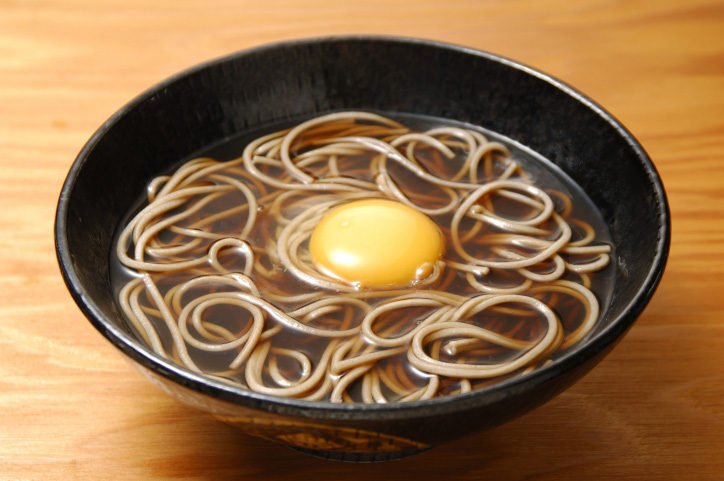
月見は“moon viewing”の意味。生卵をのせたもの。
Tsukimi means "moon viewing." This udon or soba is topped with a raw egg.
天ぷらうどん/天ぷらそば
エビなどの天ぷらをのせたもの。
This udon or soba is topped with tempura such as shrimp.
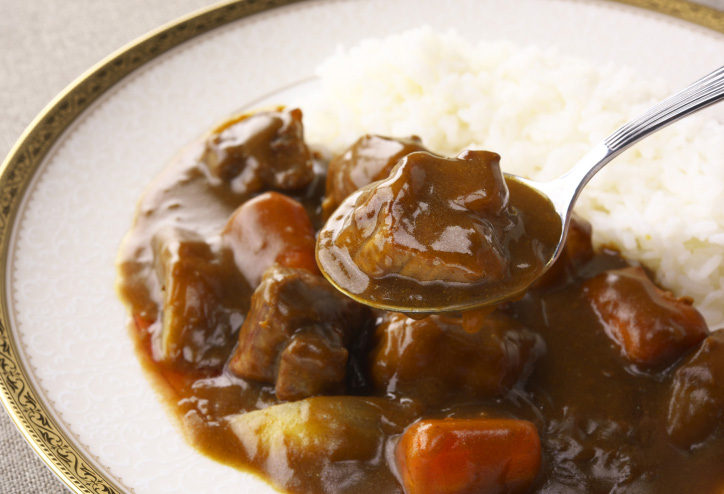
Curry is an Indian cuisine that was introduced to Japan via England during the Meiji era (1868–1912). After that, Japan developed its original style of curry. Japanese curry is different from Indian or Thai curry. The sauce is made thick using wheat flour. It is served over rice to make curry rice.
It is said that the Japanese people eat curry more than once a week on average. Curry is available at most restaurants, including set meal restaurants, soba restaurants, and gyuu-don restaurants. Most buffets in Japan include curry on the menu. In this way, curry is very popular in Japan, and has even been called a national Japanese food.
You can make Japanese curry easily using commercial pre-made curry roux. Why not try making it yourself? Many curries are also sold as "boil-in-the-bag" food. You can prepare them simply by placing the whole pouch in hot water. It is convenient to have some in your home so you can prepare a quick and easy meal.
Donburi-mono is a bowl of rice topped with ingredients. The names of donburi-mono are made by adding ~don after the main ingredient, such as gyuu-don and katsu-don. Besides gyuu-don, which was in the main text, there are many other ~don with names based on the topping.
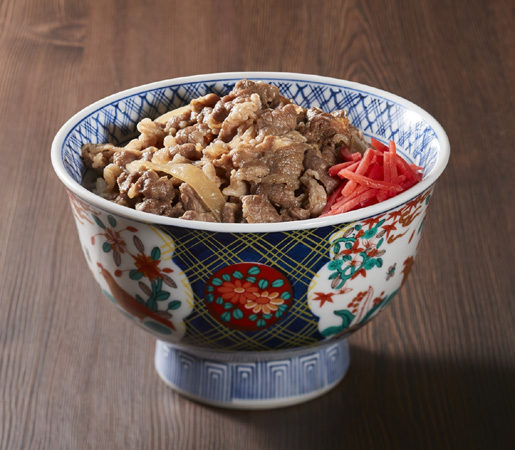
This rice bowl is topped with thin slices of beef stir-fried with onions and seasoned with a salty-sweet sauce. It is sometimes also served with red pickled ginger. There are several gyuu-don chain restaurants in Japan, such as Yoshinoya, Matsuya, and Sukiya. You can enjoy gyuu-don at low prices at these chain restaurants, and it is a popular casual meal.
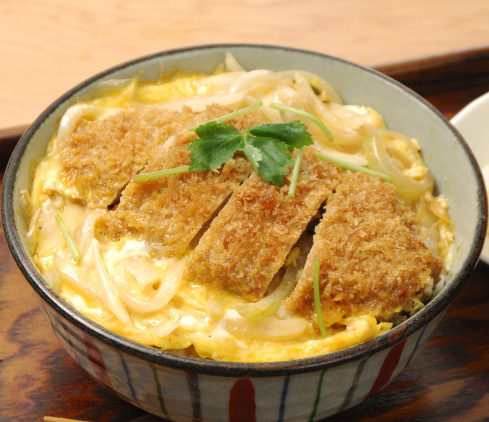
This rice bowl is topped with stewed ton-katsu (pork cutlet) and onions, and served with egg. It is available at specialty ton-katsu restaurants, and also other restaurants such as set meal restaurants and soba restaurants.
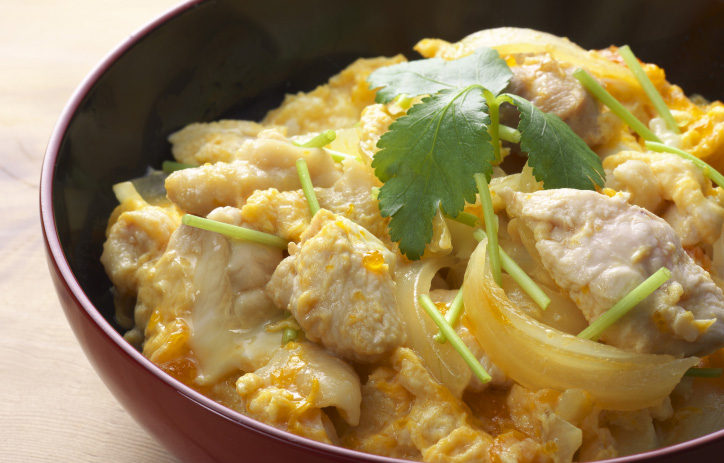
This is also a common item at set meal restaurants and soba restaurants. It is also sometimes available at yakitori (grilled chicken) restaurants. It is a rice bowl topped with stewed chicken and green onions or onions, and served with egg. It is named oyako (parent and child) because chicken and eggs are used. Some restaurants also serve a similar rice bowl with pork or beef instead of chicken. This is tanin-don (tanin literally means "unrelated person").
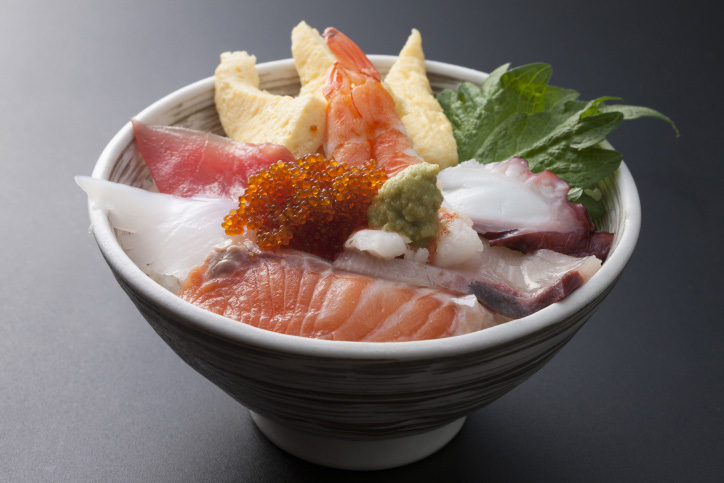
These rice bowls are topped with various types of sashimi. They have different names depending on the type of sashimi, such as maguro-don (rice bowl topped with tuna) or sake-ikura-don (rice bowl topped with salmon and salmon roe).
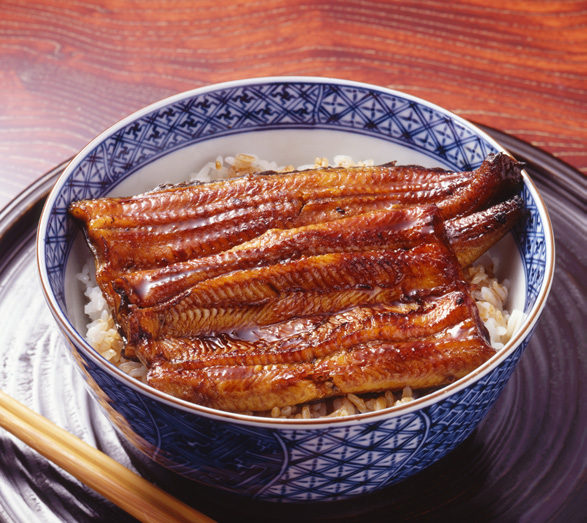
Eel that is split and cooked in soy sauce is served on top of rice. Higher-grade una-don is served in lacquered boxes, and is called una-juu. Depending on the size of the eel, these are sometimes ranked in the categories of 松 (pine), 竹 (bamboo), and 梅 (plum). Generally, the order of the ranking from highest to lowest is 松, 竹, 梅. The highest rank is usually 松 (but this may change depending on the restaurant). Eel can be quite expensive when eaten at specialty restaurants, but you can eat it at lower prices at places such as gyuu-don chain restaurants.
日本では夏の「土用の丑の日」に鰻を食べる習慣があり、この日にはたくさんの人が鰻丼や鰻重を食べます。
In Japan, there is a custom of eating eel on the Day of the Ox in midsummer, and many people eat una-don or una-juu on this day.
Are there any foods in your country that foreigners often dislike? In Japan, foreigners often cannot eat or dislike natto and umeboshi, which were in the main text, as well as shiokara, which was in the izakaya menu in the main text. Of course, everyone is different, and the things that people can or cannot eat are different. If you have the chance, why not try some of the following foods?
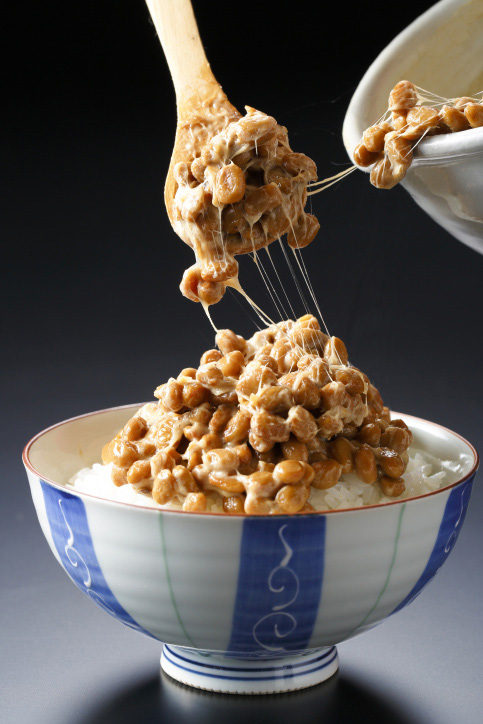
Natto is made by fermenting soybeans, and has a unique smell and sticky threads. It is a common Japanese breakfast food, but there are also many Japanese people who dislike natto. In particular, people from the Kansai region eat natto less than people from the Kanto region. It is considered a typical example of Japanese food that foreigners dislike, so Japanese people are impressed and surprised by foreigners who say they like to eat natto.
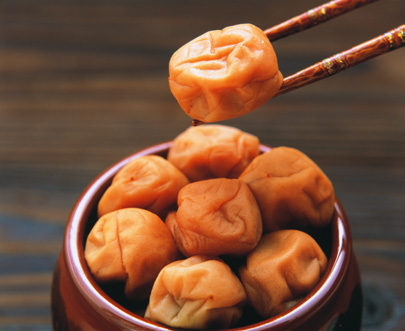
Umeboshi is made by pickling plums in salt and is extremely sour. It is added to rice balls, lunch boxes, and ochazuke (boiled rice in tea). It is also a popular health food. However, there are people who dislike it because of its sour taste.
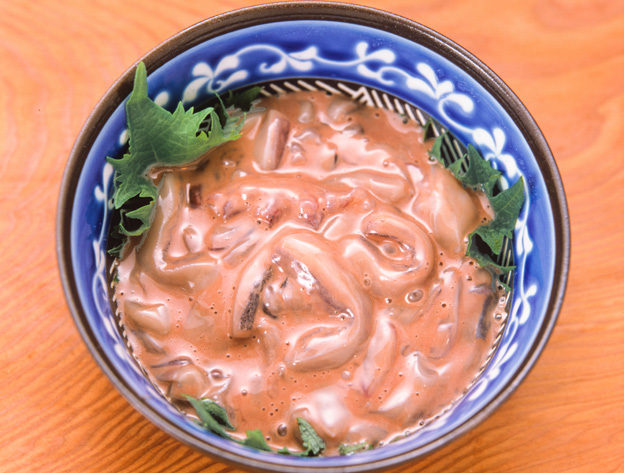
Shiokara is made by chopping up seafood such as squid, including their insides, pickling this in salt and then fermenting it. It is served over rice, or eaten as a snack with alcoholic drinks. Foreigners who dislike shiokara often say it is too salty, looks unpleasant, or is impossible to eat because it contains innards.
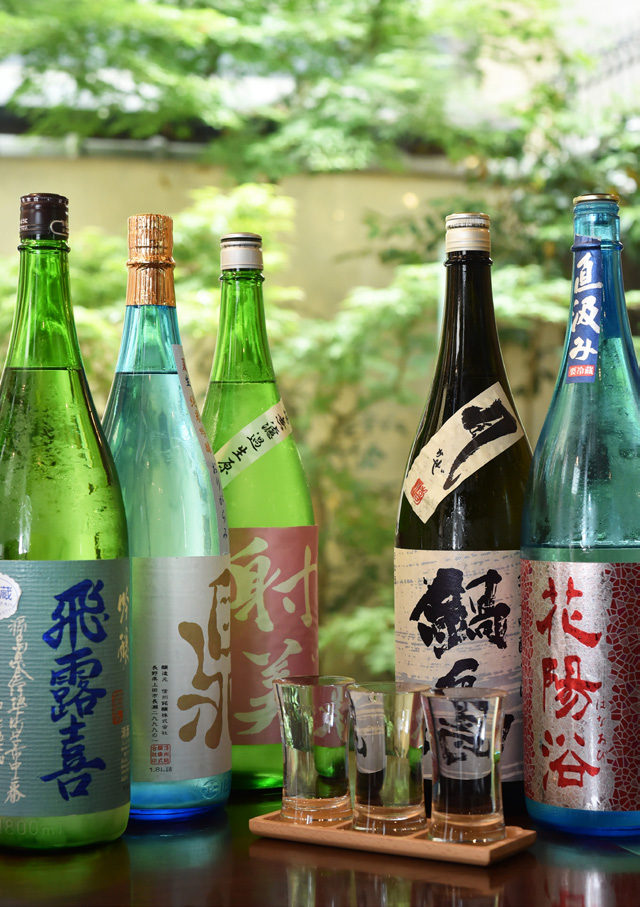
Japanese sake is made from rice. There are sake breweries all over Japan, producing various brands of Japanese sake. The alcohol content is generally about 14% to 16%. In Japanese, お酒 sometimes refers to Japanese sake, and sometimes to any alcoholic drink.
Japanese sake that is made purely from rice, malted rice, and water, without any artificial alcohol, is called junmai-shu. Japanese sake that is made from highly polished rice with its outer layer removed, leaving only the core of the rice, is called ginjyoo-shu. Junmai-shu has a mellow taste, while ginjyoo-shu is known for its fruity fragrance.
The taste of Japanese sake can be amakuchi (sweet) or karakuchi (dry). Japanese sake with a high rice content is amakuchi, while smooth Japanese sake with a high alcohol content is karakuchi. There are also different ways of drinking Japanese sake. It can be served chilled as reeshu (cold sake), or warm as atsukan (hot sake).
Japanese sake is sold even at convenience stores, and you can also enjoy it at izakayas. Recently, there are also many Japanese sake bars with sake from around the country.
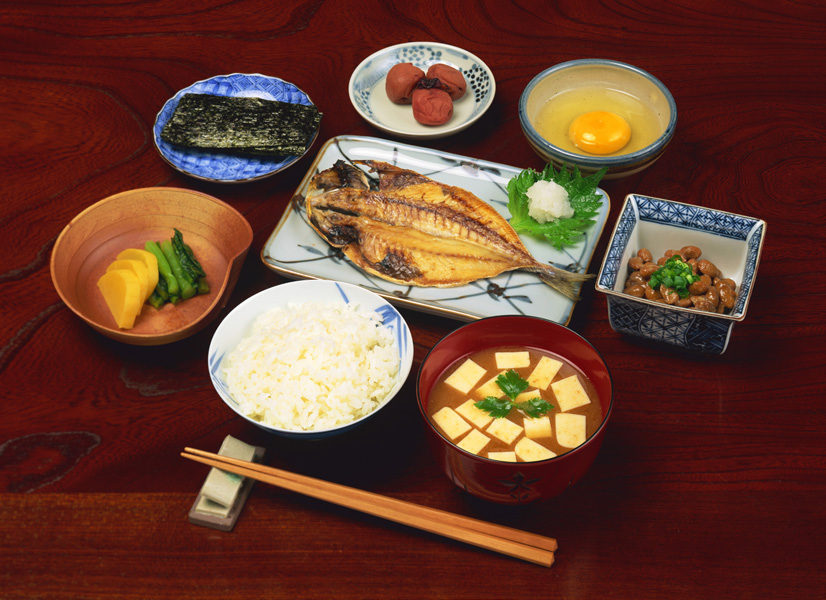
A typical Japanese breakfast includes food such as rice, miso soup, grilled fish, egg, dried seaweed, natto, and pickles. However, fewer people now eat this type of breakfast every day. Instead, more people are eating Western-style breakfasts such as bread and eggs. There are also many people who eat simple breakfasts. For example, they eat only cereal or yogurt, or they buy a sandwich from the convenience store. There are also people who do not eat breakfast.
Miso soup is a soup made by cooking miso in soup stock. It contains ingredients such as tofu, wakame seaweed and radish. You do not drink miso soup with a spoon. Instead, you hold the bowl in your hand and drink directly from the bowl. If the miso has sunk to the bottom of the bowl, stir the soup lightly with your chopsticks before drinking.
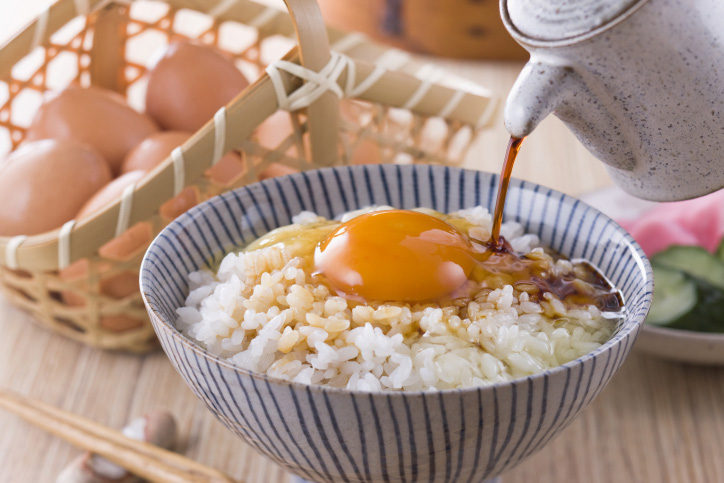
Raw eggs are also often eaten for breakfast. There are not many countries in the world where eggs are eaten raw. Foreigners have the impression that eating raw eggs can make you sick. However, eggs in Japan are cleaned and treated because they will be eaten raw, so it is safe to eat them raw if they are fresh. Raw eggs are often mixed with soy sauce or broth, then poured over rice and eaten as tamago-kake-gohan (white rice mixed with seasoned raw egg). Tamago-kake-gohan is eaten not only at breakfast, but also after having alcoholic drinks. It is sometimes written as "TKG" on izakaya menus.