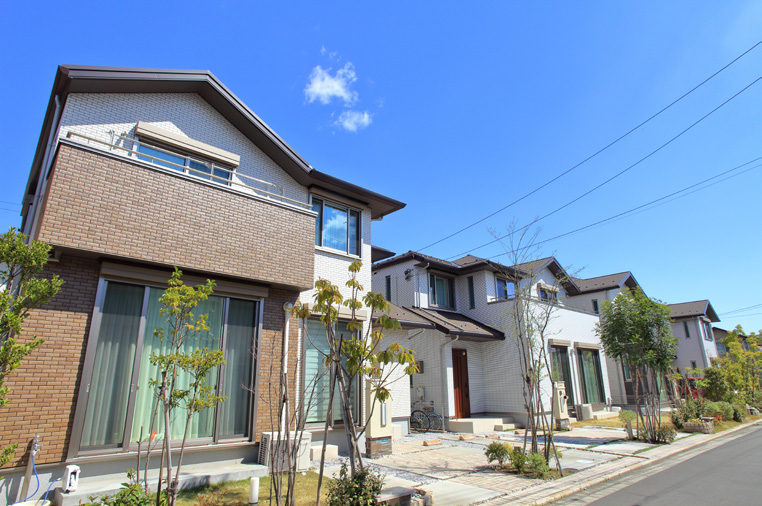
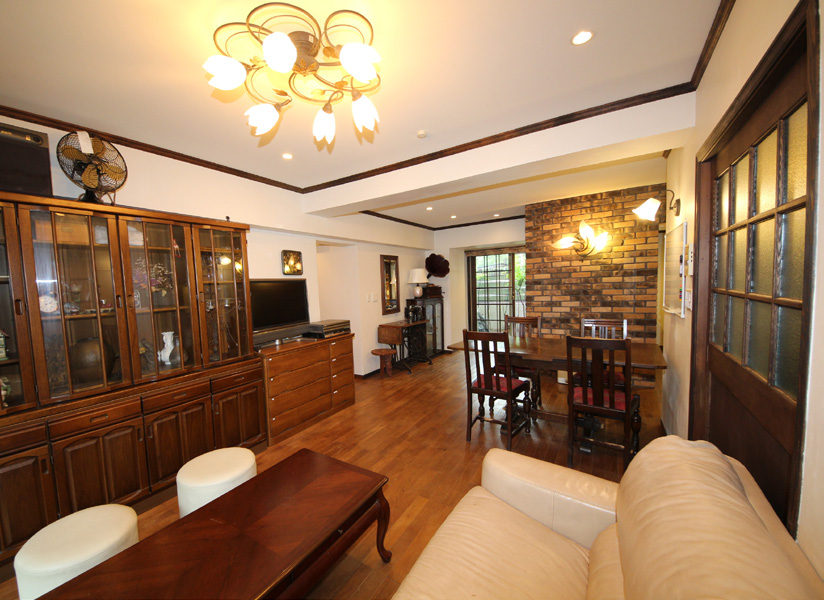
These days, there are fewer houses built in the traditional Japanese style. However, even today, most Japanese houses are built from wood. The layout of a house is shown in formats such as 2LDK. This means that there are two bedrooms, one living room, and one dining room / kitchen. The following are some typical features of Japanese houses.
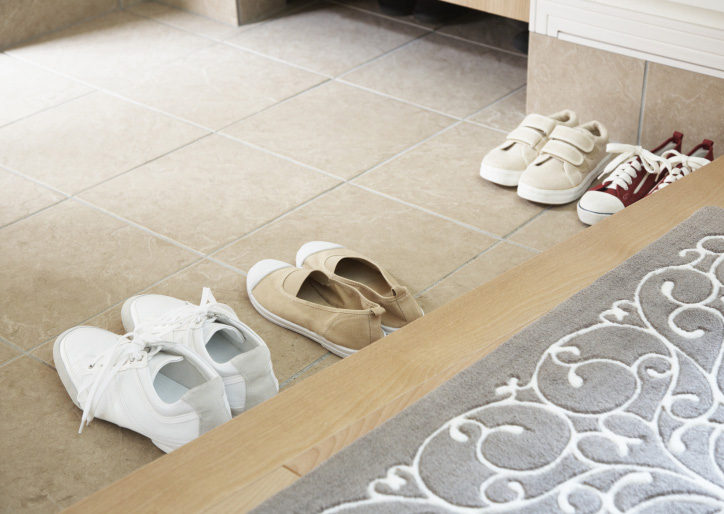
There is a step at the entrance hall going up into the house. The step divides the inside of the house from the outside. In Japan, you must take off your shoes when entering a house. Take off your shoes, then go up the step into the house.
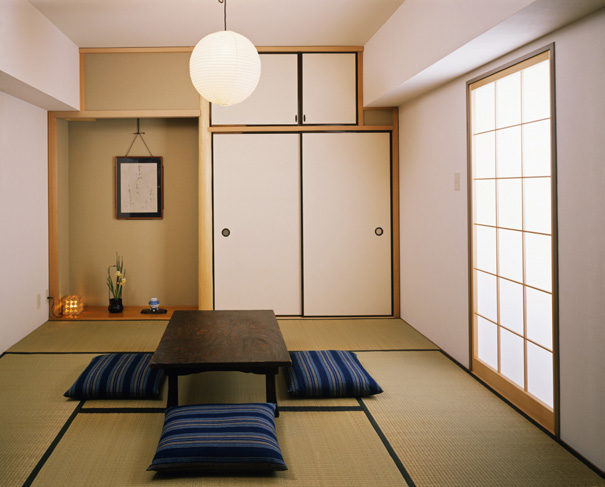
A washitsu is a traditional Japanese room. The floor is made of tatami mats (traditional Japanese flooring made from rush or rice straw). Some washitsu also have a space called toko no ma (an alcove). The storage space is called oshiire (a closet). The oshiire holds bedding and other items. The oshiire has a fusuma (sliding door made of paper) that is opened and closed. Sometimes, washitsu rooms are also separated by a fusuma. Instead of curtains, the windows of a washitsu usually have shooji (a paper screen). These are wooden frames covered with paper. Nowadays, fewer houses have a washitsu room.
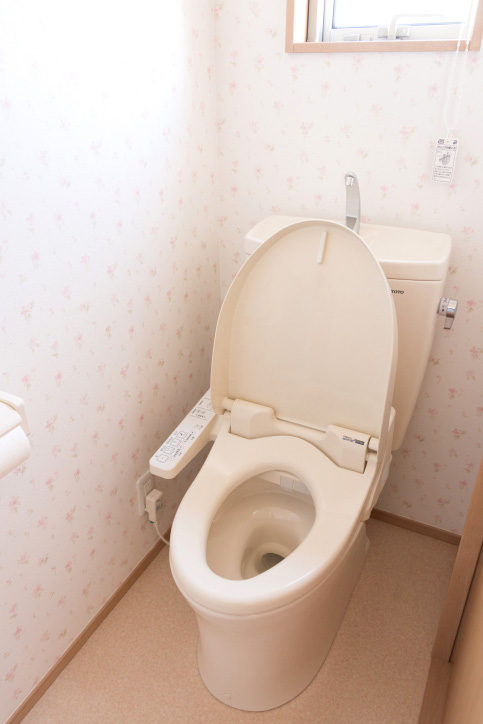
The toilet is usually in a separate room from the shower / bath. There are now very few Japanese-style toilets and most are Western-style. Many toilets are now also equipped with warm water electric bidets. When entering a toilet, people usually put on toilet slippers.
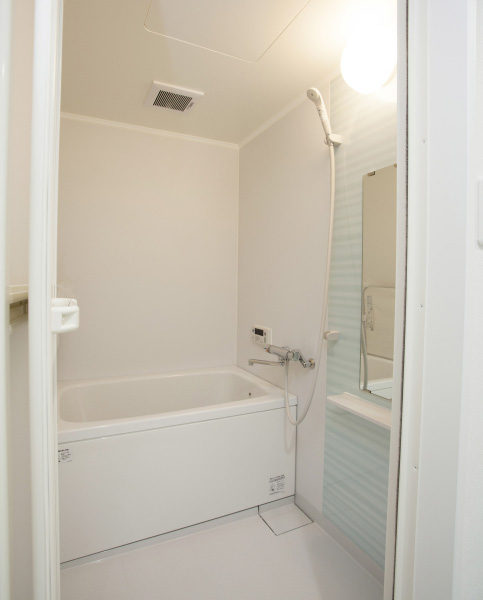
Japanese houses usually have bathtubs. However, you do not wash yourself in the bathtub. Before entering the bath, you wash your hair and body outside the tub. After washing, you soak yourself in the bathtub to warm yourself and relax.
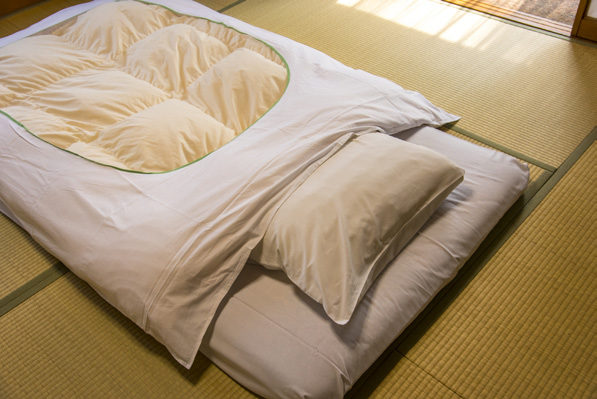
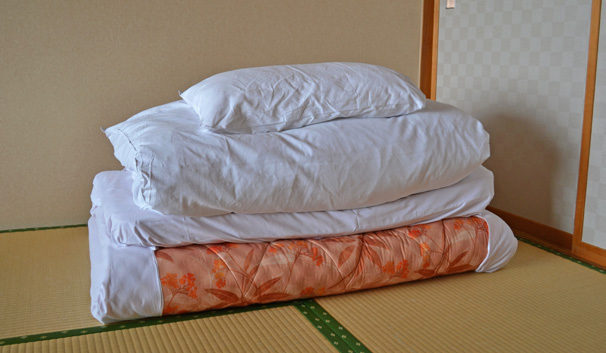
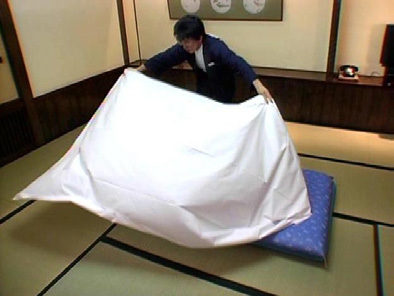
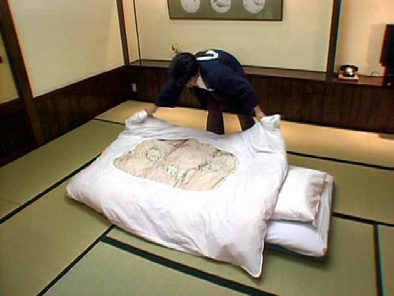
Japanese people generally sleep in beds these days. However, when sleeping in a washitsu, they sleep on a futon that is laid on the floor. It is also possible to buy a wooden bed frame and place a futon on it. The futon is still widely used now.
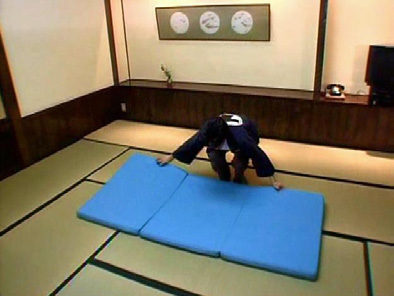
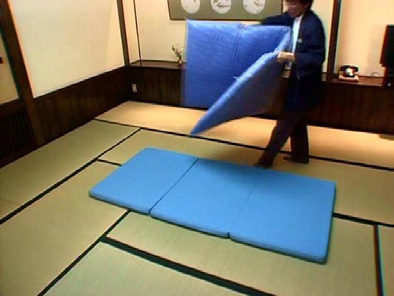
The futon is made up of two parts. One is the shiki-buton, which is the bedding that you lie on. The other is the kake-buton, which is the quilt that you cover yourself with. Some people place a thin mattress under the shiki-buton. This is how you prepare the futon.
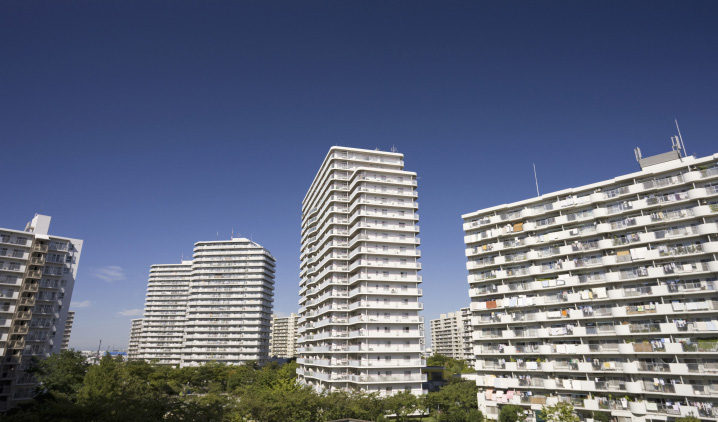
In the Japanese language, manshon ("mansion," meaning "condominium") is a type of housing complex. It is quite large, and is built from reinforced concrete. People can buy or rent a unit. Many manshon blocks have been built in recent years, especially in urban areas. There are also tawaa manshon ("tower mansion," meaning "high-rise condominium blocks," and shortened to tawa-man). These are built to use the land more effectively.
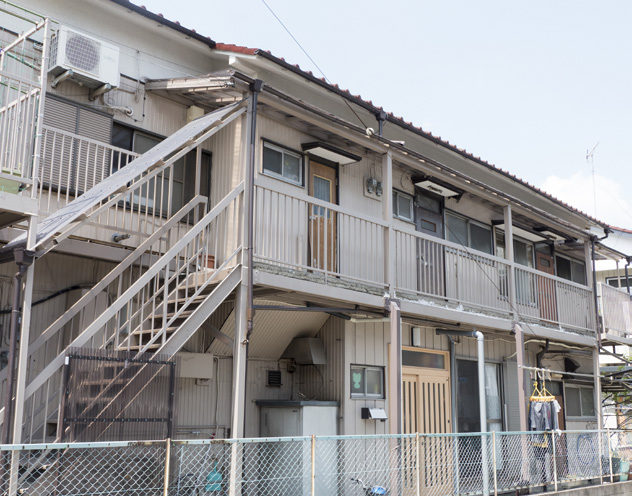
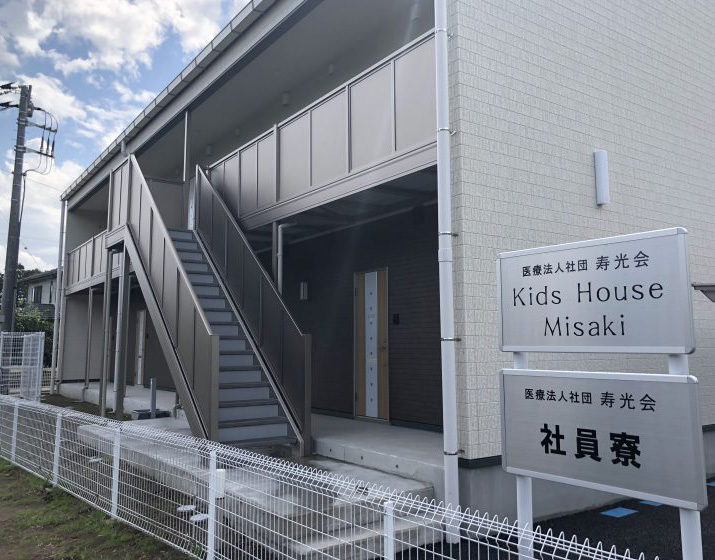
An apaato building is not as big as a manshon building. It is usually two to three floors high without any elevators. There are few units in each block. Many are built from wood. People usually rent apaato units to live in. People generally think that apaato rents are cheaper. However, there are no clear differences between manshon and apaato under the law.
Many people also live in houses, especially in the suburbs and outside big cities. Most of these people buy the houses themselves to live in. Some people live in urban housing complexes when they are young. Then, they move to the suburbs and buy a house after they get married and start a family. Nowadays, more people want to live in houses in convenient parts of the city. Because of this, more three-floor houses have been built on small plots of land in urban centers.
A shared house is designed for several people to share and rent together. There are private rooms and shared spaces. Each person has a private room but they share the other spaces such as the kitchen, shower, and lounge. Shared houses are popular among students and foreign residents because they can interact with their housemates.
There are company dormitories and student dormitories. These are housing complexes for company employees or students. Each person has a private room. Everyone then shares spaces such as the toilets, kitchens, and bathrooms. There are also dormitories without private rooms. Instead, each person is assigned a bed. Some dormitories also provide meals every day at a cafeteria. Rent is usually very cheap.
An address is written differently depending on if it is in the 23 wards of Tokyo, ordinance-designated cities, regular cities, or towns and villages. See below.
①② ⑨
②→⑨は、大→小の順です。
② to ⑨ are in order from large to small.
① 郵便番号
郵便番号は、3桁+4桁の計7桁の数字です。住所のいちばんはじめに書きます。
The postal code is a seven-digit number. The first half has three digits. The second half has four digits. It is the first part of the address.
Japan is divided into 47 都道府県 (prefectures). Metropolitan Tokyo is the only 都 (metropolis), and Hokkaido is the only 道 (circuit). Osaka and Kyoto are 府 (urban prefectures). The remaining 43 are 県 (prefectures).
After the prefecture, comes the 市 (city), 町 (town), or 村 (village). However, the 23 wards of Tokyo do not have city names. 町 and 村 come after 郡 (county).
Areas are usually divided into blocks and blocks are divided into lots. The numbers after the area name are the 丁目 (block number), followed by 番地 (lot number), and 号 (building number) which shows the location of the building. These three numbers are separated by hyphens. These are written as "-" but read as no when spoken. For example, 5-6-36 is read as go-no-roku-no-sanjuuroku. However, the part of the address after the city, town or village name is shown differently in different regions.
Japanese roads do not have names, except for major roads and shopping streets. This is why it is important for Japanese addresses to include the area name, instead of the road name. Also, the numbering of 号 is not in order in some areas. This can make it difficult to find the building.