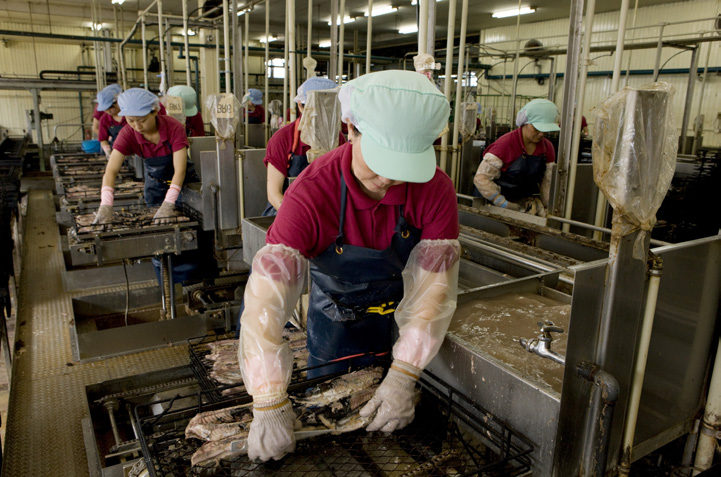
In the main text, there was a situation where a person was changing clothes in the changing room at work. This means that they were changing from their plain clothes into their work uniform. In Japan, uniforms are used in many places such as workplaces and schools. At factories, people change into work clothes to stay safe when they are working. Sometimes companies provide work clothes as uniforms, which helps the workers. Work uniforms also help people to tell the difference between company staff and outsiders immediately. Uniforms can help people in the company feel more together.
Even when there are no uniforms, employees are sometimes expected to dress in a certain way in some industries or companies. For example, there may be an unspoken understanding that employees in a financial company should dress in a similar way. For example, they may wear dark blue or dark gray suits, white shirts, striped neckties, and black leather shoes. In Japanese society, people may sometimes be required to dress alike, instead of dressing in a unique and individual way. However, this may be different for each workplace. So, when there are no uniforms, it is best to start by asking about how to dress for work.
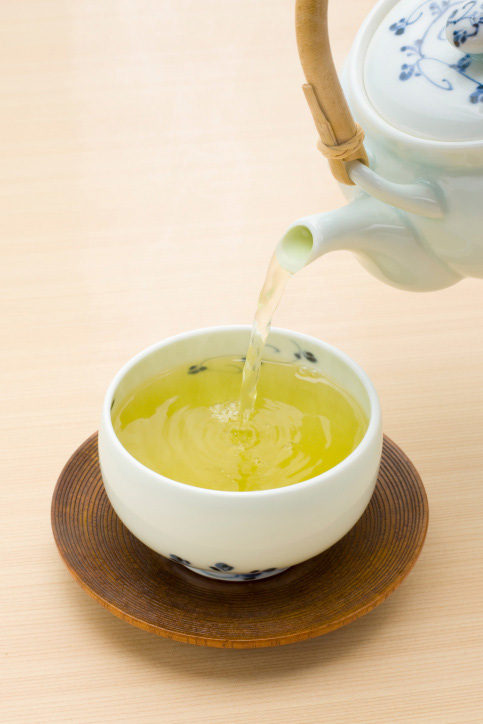
In the Japanese language, お茶 can refer to green tea, or broadly to tea in general. Green tea can be made in a teapot, or using teabags. People often drink it hot. However, cold green tea sold in plastic bottles is also becoming more common. Here are some of the other teas that people drink in Japan.
This is fermented tea. It is the type of tea that people normally drink outside Japan. In Japan, black tea is often made by putting a teabag in hot water.
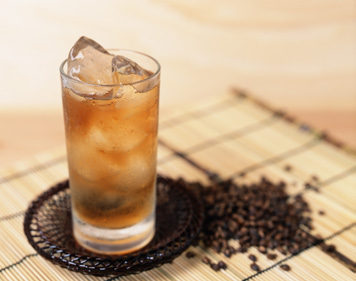
This tea is made from barley. People often drink it cold, especially in summer. There are also restaurants that serve barley tea for free instead of water.
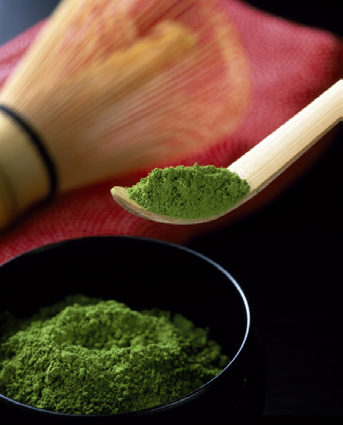
This is tea leaf powder. It is used in the tea ceremony. In addition to drinking it as tea, it is also a popular ingredient for sweets such as cakes, chocolates, and ice-cream.
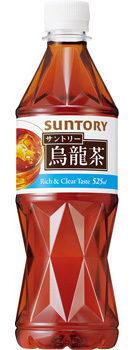
ウーロン茶 (Oolong tea)
中国を原産とする、半分発酵させたお茶。茶色で独特の渋みがある。
Oolong tea comes from China. It is a half-fermented tea. It is brown and has a unique and bitter taste.
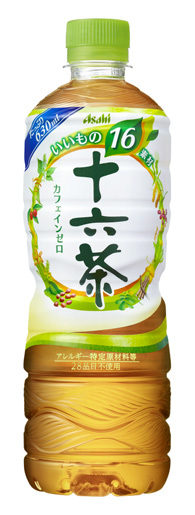
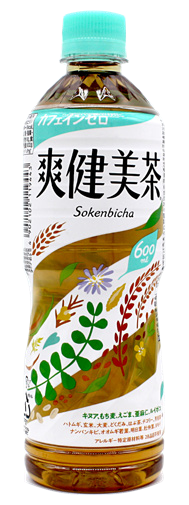
There are also other products that are made of a blend of different teas. These are sold in plastic bottles. Some examples are 爽健美茶 (Sokenbicha, a brand of blended tea) and 十六茶 (Jurokucha, another brand of blended tea). Except for black tea, teas in plastic bottles in Japan do not have sugar, so they are not sweet. They go well with food like rice balls and lunch boxes.
お茶のいれ方How to make tea
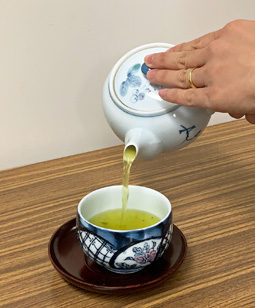
急須で温かい緑茶をいれるときは、次のような方法でいれます。
Here is how you make hot green tea in a teapot.
1
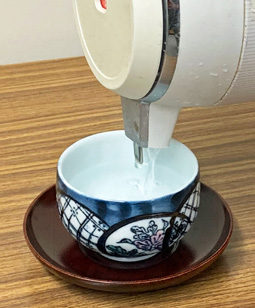
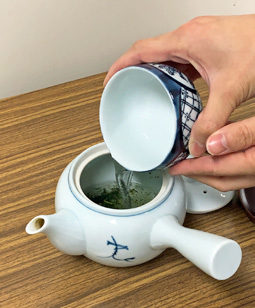
湯飲みにお湯を入れます。
Pour hot water into a teacup.
2
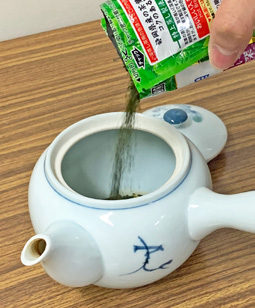
急須にお茶の葉を入れます。
Put tea leaves into the teapot.
3
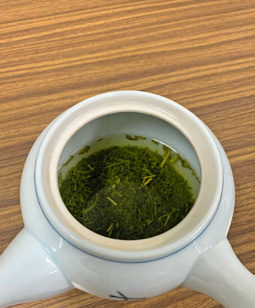
急須に、湯飲みからお湯を移します。
Pour the hot water from the teacup into the teapot.
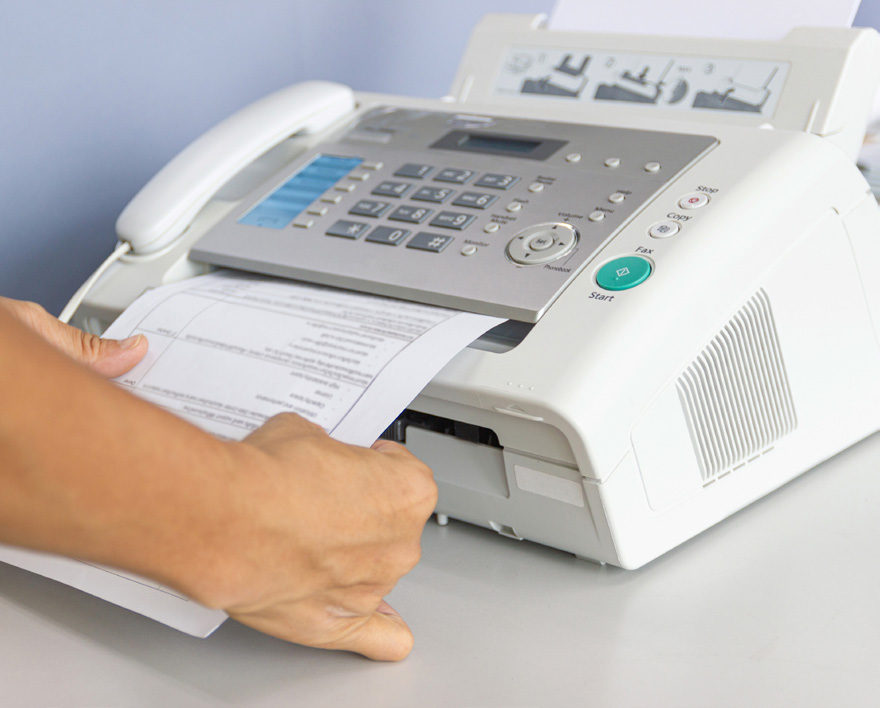
Fax (facsimile) is a machine that turns images into data and sends this out through telephone lines. The recipient prints out the message on paper. It was widely used around the world until the 1990s but it is gradually disappearing due to the spread of the Internet.
However, fax is still used in Japan. In particular, it is often used for the exchange of official government documents, and notifications and communications related to the media. Some people think that fax is still used in Japan today because it can send images of official seals and handwritten documents directly so it is considered more reliable than e-mail. Even now, e-mails are sometimes not accepted by government offices. Instead, the documents must be sent through fax.