Golden Week is a series of continuous holidays from the end of April to the beginning of May. Showa Day on April 29, Constitution Memorial Day on May 3, Greenery Day on May 4, and Children's Day on May 5, together with weekends and substitute public holidays, are a long continuous holiday. The length of the holiday changes every year depending on the calendar.
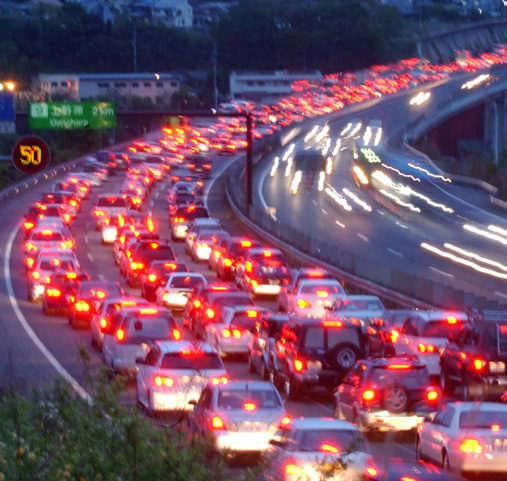
If you want to take a holiday during Golden Week, you need to make plans early and book your hotel and transportation early. Hotels, air tickets, and other costs are generally higher during Golden Week. The highways and sightseeing spots also become crowded.
There is also Silver Week in September. This is a continuous holiday of Respect for the Aged Day on the third Monday of September, Autumnal Equinox Day around September 22 or 23, and the public holidays before and after them. There is a law that, if there is one day between these two holidays, this day will also be a public holiday. However, Silver Week is always shorter than Golden Week.
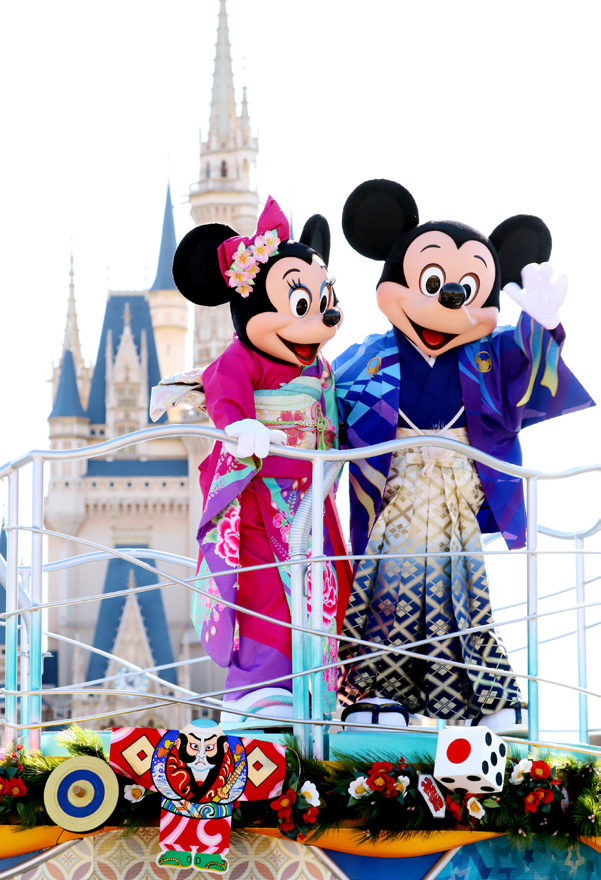
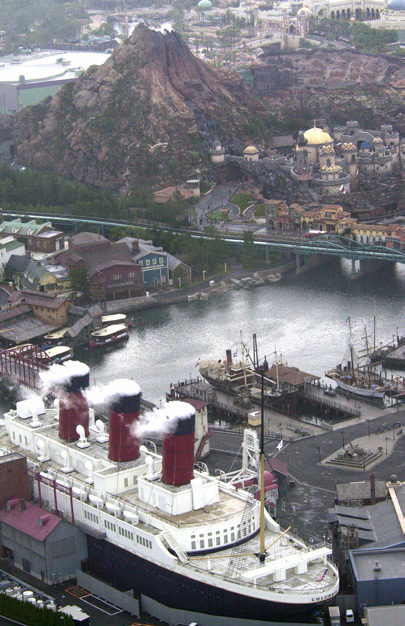
Tokyo Disney Resort is a theme resort in Urayasu City, Chiba Prefecture. It has two theme parks, Tokyo Disneyland and Tokyo DisneySea. Disneyland is a similar theme park to the ones in the United States and China. There are seven themed lands, such as Tomorrowland and Fantasyland, around the symbolic Cinderella's castle. DisneySea is a unique theme park that is only in Japan. It is based on the theme of the sea. There are various attractions in each theme park, and shows are performed several times a day.
Tokyo Disney Resort becomes very crowded on weekends and national holidays, year-end and New Year holidays, and during school holidays such as summer and spring breaks. You may sometimes have to wait several hours to get on a ride. It is a good idea to make preparations and plans before you go. For example, you can download the official app and get the FASTPASS (a ticket that gives you priority for getting on a ride or entering an attraction without waiting). Entry into the resort itself is sometimes restricted when it is very crowded. So, if you have decided on the date of your visit, you should buy the tickets for the specific date in advance.
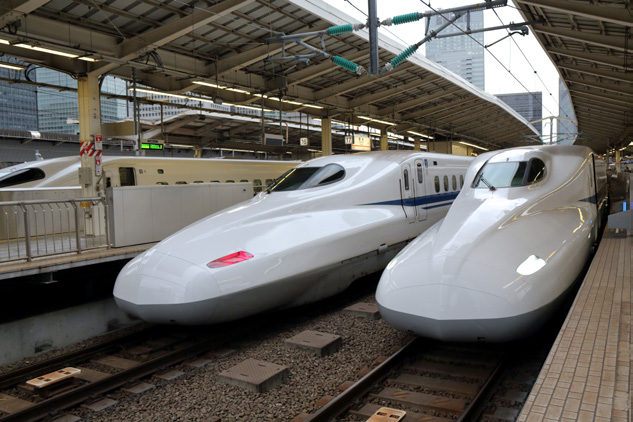
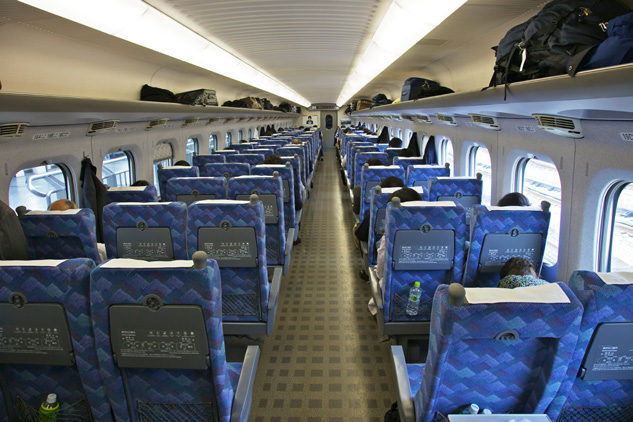
The Shinkansen is a high-speed rail that connects Japanese cities. It travels at speeds of 250 to 300 km/h. There are nine Shinkansen routes in Japan, and some other routes are under construction (2020). Using the Shinkansen, you can travel from Tokyo to Kyoto in about 2 hours and 20 minutes.
The Shinkansen timetable is managed in seconds, and the average delay time is just 24 seconds. It is quiet and comfortable in the train. You can sometimes buy drinks and meal boxes from staff with shopping carts on the train.
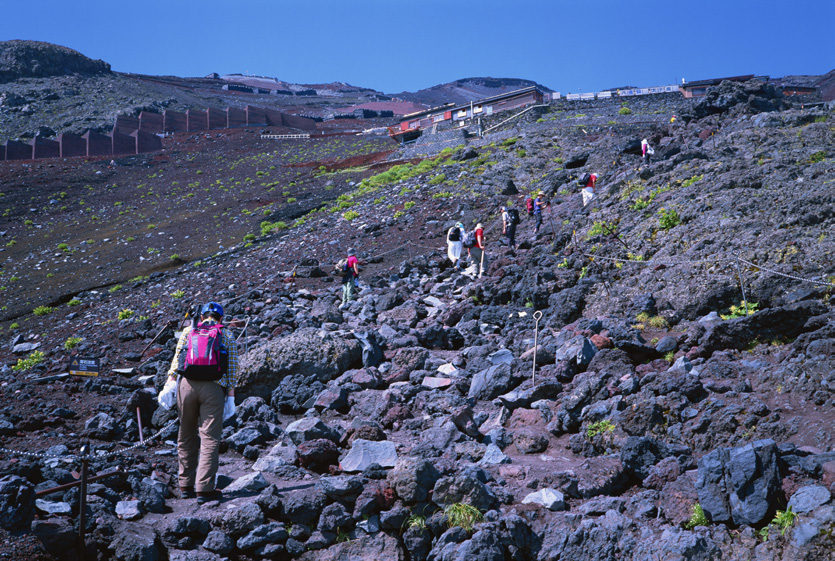
Mt. Fuji is the highest mountain in Japan with an altitude of 3,776 m. However, it is also popular because anyone can climb it and reach its summit. Regular people can only climb Mt. Fuji in summer, in July and August. The mountain huts are also opened during this period. From children to adults, anyone can try to climb Mt. Fuji.
The summit is 20 degrees colder than on flat land, so it is necessary to wear warm clothes such as sweaters even in summer. Some tourists do not know this. They reach the summit of Mt. Fuji in T-shirts and shorts, and look like they are freezing. Be sure to dress warmly.
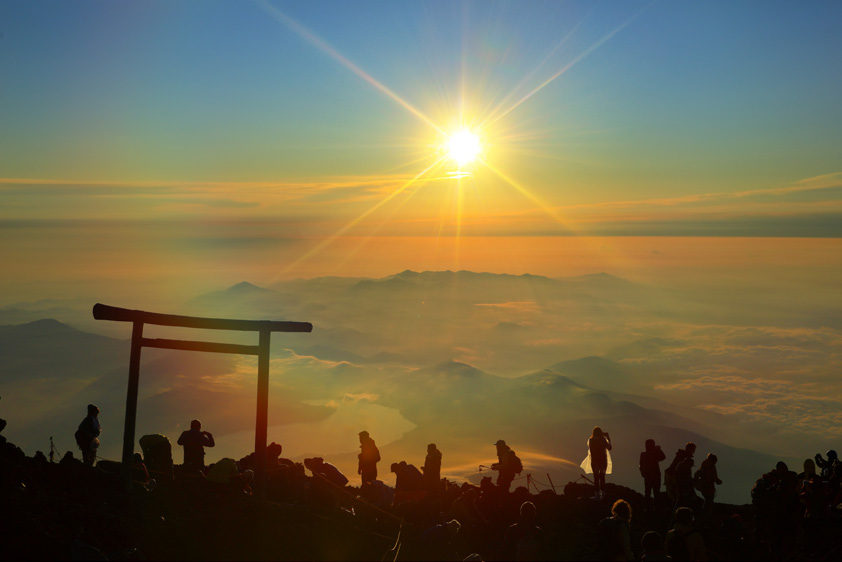
If you want to reach the summit of Mt. Fuji, a popular climbing plan is to take the bus to the fifth station and start climbing around noon. You will then get to a mountain hut at the eighth or ninth station at night, have dinner and take a nap. Then, you will start climbing again around 2 a.m. to catch the goraikoo (sunrise from the top of a mountain). Staying at a mountain hut also helps your body gradually get used to the air pressure on a high mountain. If the weather is fine, you can enjoy spectacular views from the climbing path or the summit, such as the night views of Tokyo and Yokohama, stars in the sky, a sea of clouds, and the sunrise.
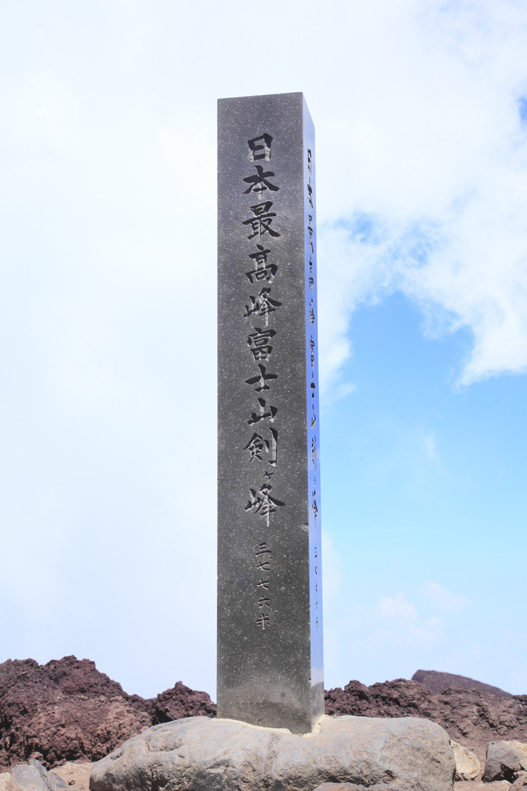
There is a shrine at the summit of Mt. Fuji that many climbers visit. Surprisingly, there is also a post office, toilets, and vending machines at the summit. The highest point of Mt. Fuji is Kengamine. It is a 30-minute walk from the shrine at the summit, along the crater. If you do not reach Kengamine, you cannot say that you have reached the highest point of Japan.
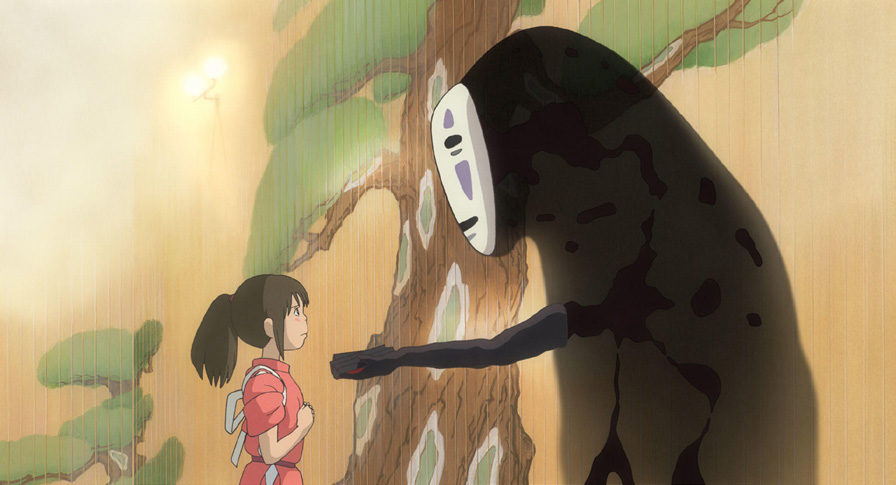
Japan began exporting its TV animation to other countries around the 1970s. Children around the world became fans of these shows without even knowing that they were Japanese animation. During the 1990s, people began to recognize it as a part of Japanese culture, and the word "anime" became widely used for Japanese animation. Animated films such as AKIRA directed by Otomo Katsuhiro, Ghost in the Shell directed by Oshii Mamoru, and Princess Mononoke directed by Miyazaki Hayao are popular around the world. After that, the distribution of DVDs and spread of online streaming sites helped promote Japanese animation even more widely around the world. There are TV series such as Dragon Ball, Mobile Suit Gundam, Neon Genesis Evangelion, and Case Closed. There are also game adaptations such as Pokémon, and films such as Spirited Away and In This Corner of the World. Many of these works have won over many fans and are appreciated worldwide.
Your Name is an original feature film directed by Shinkai Makoto. It was released in 2016. It is a science fiction story about a girl and a boy who switch bodies across time and space. The film was a hit, especially its beautiful images. These were based on actual places, re-created in great detail. The final scene was set on the stairs of Suga Shrine in Yotsuya, Shinjuku, which became famous among fans of anime. As explained in the main text, anime fans are motivated to visit the actual places shown in the animation to make "pilgrimages."
Doraemon was originally a manga by Fujiko F. Fujio. It was made into a TV animation. The story is about how Doraemon, the robot from the future, uses magical gadgets to help the boy Nobita. Doraemon is a nationally loved character that everyone in Japan knows. Today, it has been exported to many countries, and is very well-known around the world.
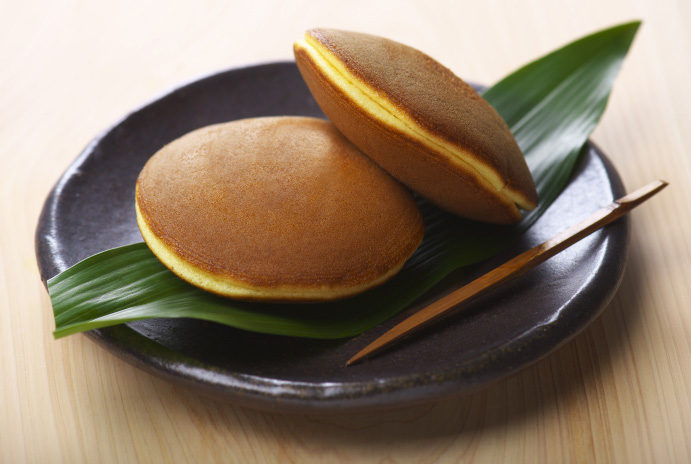
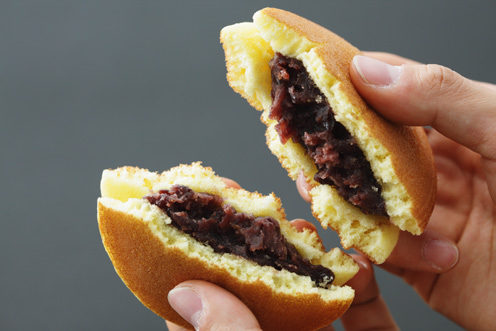
Dorayaki is a Japanese snack made of anko (sweet bean paste) sandwiched between two round castella-like cakes. It is known widely throughout the world as Doraemon's favorite food. Dorayaki is available at convenience stores and Japanese sweet stores. It is also sold at dorayaki specialty stores. Besides the traditional dorayaki, you can also get dorayaki with cream filling, or dorayaki with mochi filling.
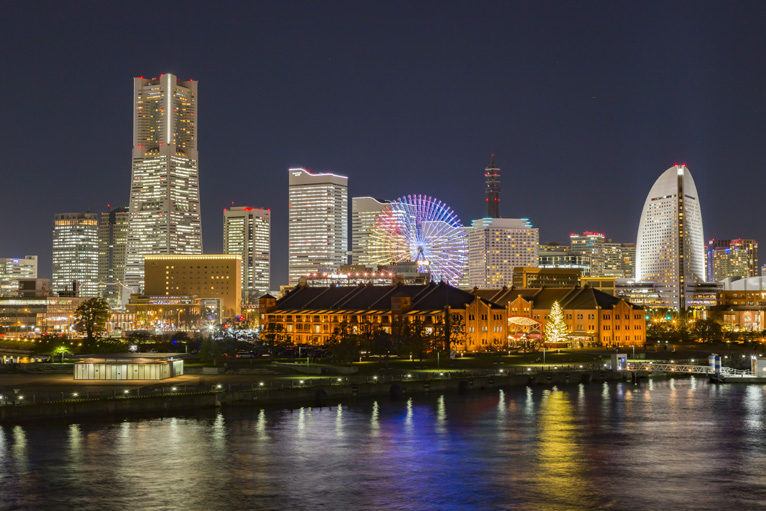
Yokohama City in Kanagawa Prefecture is the second most populated city in Japan after Tokyo. It is located south of Tokyo, about 30 minutes from Tokyo by train.
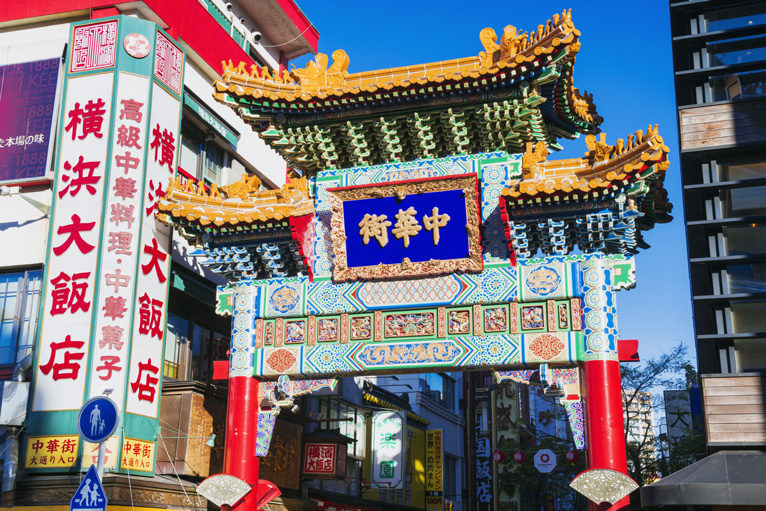
Yokohama grew as a port for foreign trade and was influenced by foreign cultures, such as China and the United States. Yokohama Chinatown is especially famous. There are many Chinese restaurants there, and it has become a sightseeing spot. Near the port, you can take a cruise on a boat or take a walk in the park, and enjoy Yokohama at your own pace. The newly developed Minato Mirai 21 area is a tourism and commercial hub. It has many modern buildings, such as Yokohama Landmark Tower.
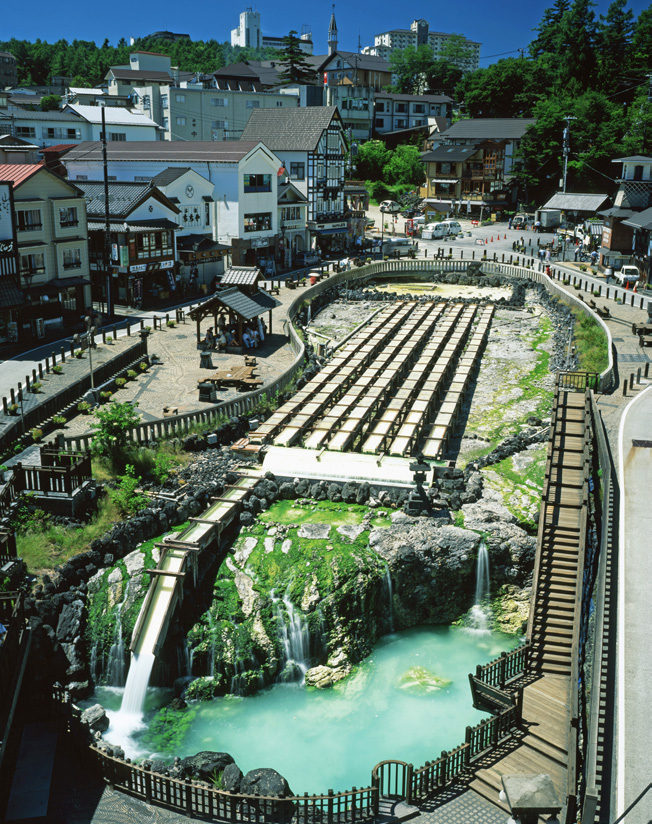
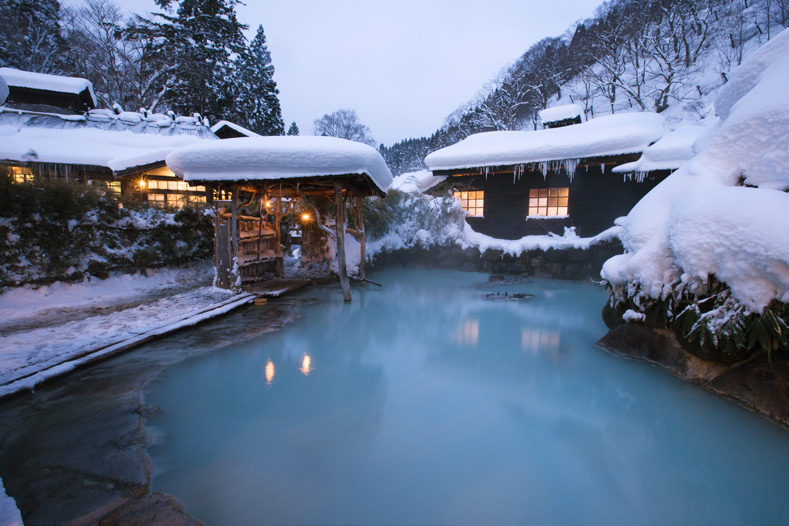
As there are many volcanoes in Japan, hot springs can be found in many parts of Japan. There are about 3,000 hot springs in Japan, and you can visit a hot spring anywhere in the country. Beppu Onsen, which appears in the main text, is a hot spring area in Oita Prefecture of Kyushu. It is famous as Japan's top hot spring area for the number of hot spring sources and hot spring yield. There are a number of other famous hot spring areas in Japan. For example, there is Kusatsu Onsen in Gunma Prefecture, which is well-known for strongly acidic waters that contain sulfur. There is also Nyuto Onsenkyo in Akita Prefecture, which still retains the atmosphere of traditional hidden hot springs.
入浴のマナーBathing etiquette
以下は、温泉に入るときのマナーですが、温泉にかぎらず、一般の銭湯にも当てはまります。
Here is the etiquette for entering a hot spring and public baths in general.
温泉に入るときは、普通は水着や下着を着ません。裸で入ります(水着を着て入る温泉も一部あります)。
When entering a hot spring, you do not usually wear a swimsuit or underwear. Enter the hot spring without any clothes on. (There are some hot springs where you wear a swimsuit.)
風呂に入る前に、湯船の外の洗い場で体を洗います。
Before entering the bath, wash your body at the washing area outside the bathtub.
風呂には、タオルを浸けてはいけません。また髪の毛もできるだけ浸けないようにします。
Do not soak your towel in the bath. As much as possible, try not to soak your hair in the bath.
If the water is too hot and you cannot enter the bath because the water is too hot, ask the people around you if it is fine to add cold water. It is rude to just add cold water without asking.