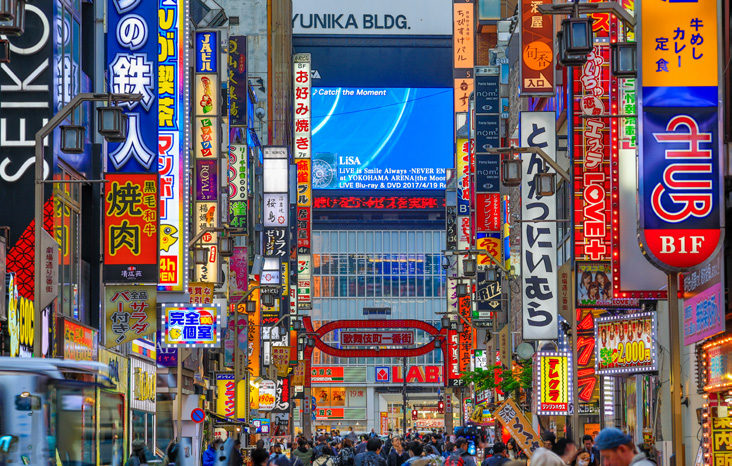
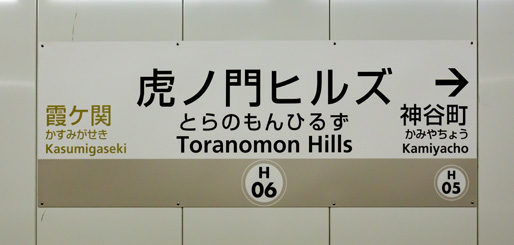
Of all the languages in the world, Japanese has the most complex character system. It uses several types of characters—kanji, hiragana, katakana, and romaji (Latin alphabet).
Kanji characters are originally from China. Japanese is basically written using kanji and hiragana, and kanji is used to carry the meaning of a sentence. Another characteristic of Japanese is that a single kanji character can be pronounced in several ways. For example, in the word 日曜日 (Sunday), the character 日 is pronounced as both nichi and bi.
Hiragana characters were created by simplifying kanji characters. They were created in Japan in the early Heian era (794–1185). Hiragana is mainly used for the grammatical parts of a sentence, including particles such as ~は and ~から, and the ends of verbs and adjectives such as ~ます and ~くないです.
Katakana characters were created in Japan at around the same time as hiragana, and were created based on parts of kanji characters. Katakana is mainly used for words of foreign origin, such as メール (e-mail), プレゼント (present), and ハンバーガー (hamburger). The names of places and people in foreign countries are often written in katakana. In addition, katakana is also used for onomatopoeia such as ガタガタ (rattling) and キョロキョロ (looking around restlessly), the names of animals and plants such as サル (monkey), バラ (rose) and エビ (shrimp), and slang words such as ウケる (to be funny) and ヤバい (terrible, crazy, or amazing).
The Latin alphabet is also used in Japanese. Abbreviations such as SNS and DVD, and proper nouns such as JR, JAL, NHK, Windows, and Facebook are written in the Latin alphabet even in Japanese. Sometimes, English is also used as it is, such as OKです (It's OK) or Noと言う (Say "no"). When Japanese is written out using the Latin alphabet, it is called romaji (Romanized characters). Recently, it is very common to write out station names and place names in romaji so that foreign visitors to Japan can read them.
When saying a person's name in Japanese, you usually say ~san after it. ~san is very convenient because it can be used for anyone, male or female, older or younger, or married or unmarried.
For Japanese names, it is common to call someone by their family name and ~san. The given name is used among family and close friends, and is rarely used at work or other formal situations. However, foreigners are called by whichever name they like, and ~san. This can be their family or given name.
Besides ~san, you can also call someone in other ways, such as ~kun, ~chan, and ~sama. A casual way to call a male of the same age or younger is ~kun. A way to call children and sometimes close friends is ~chan. A more polite way to say ~san is ~sama. In spoken language, ~sama is used by shop staff when calling customers by name.
Although the Gregorian calendar is also used in Japan, era names that are unique to Japan, known as gengoo, are also used for official government documents and in other situations. The gengoo has been used since 645, and the gengoo 令和, which started in 2019, is the 248th gengoo of Japan. Today, the gengoo is updated whenever there is a new Emperor. The gengoo is not only used to refer to individual years, but is used to represent specific eras, such as "classic songs of the Showa era" or "the serious economic depression of the Heisei era." In this sense, it is deeply rooted in the lives of the Japanese people.
The follow table shows years by Gregorian calendar and by gengoo. If you can say which year you were born in using the Japanese gengoo, it will probably surprise Japanese people. Also, the first year of a gengoo is called the 元年.