Commuting to work in Japan is different in urban and rural areas. Cars are essential to life in rural areas, including for commuting. However, few people drive to work in urban areas. They generally take the train to work.
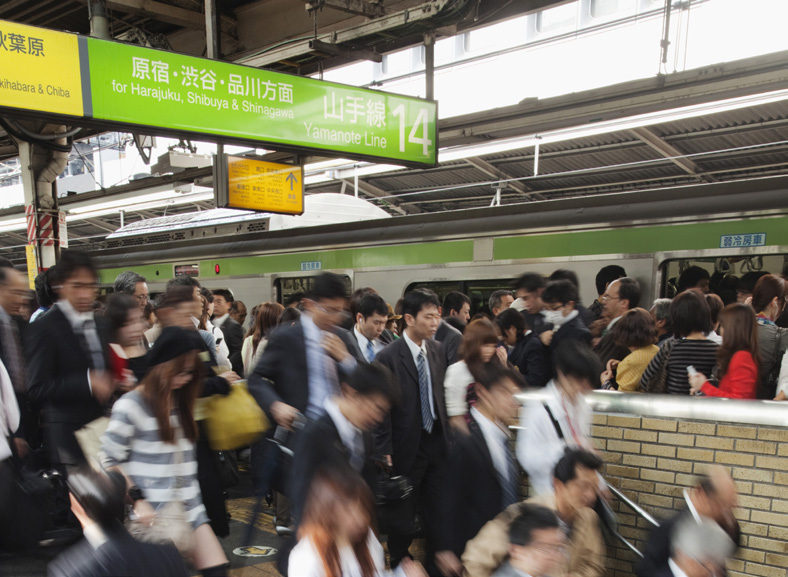
Rush hour is a problem in large cities like Tokyo and Osaka. In particular, the trains going into the city become very crowded at rush hour, from about 7:30 a.m. to 9:00 a.m. There are part-time workers on crowded station platforms who push commuters into the trains. However, the situation now is not as bad as in the past. This is because people start work at different times and more people work from home.
In Tokyo, it takes about one hour on average for people to go to work by train. For many people, such as people who live in houses in the suburbs, it takes almost two hours.
When taking a train in Japan, your ticket is checked twice. The ticket is checked once when you enter the ticket gates, and once when you exit the ticket gates. To take a train, you can buy a ticket or use a prepaid transportation card such as Suica or ICOCA.
電車の乗り方(交通系ICカードを使う場合)Taking a train (using a prepaid transportation card)
よく電車を利用する場合は、カードを買っておくと、簡単で便利です。
It is easy and convenient to buy a prepaid card if you often take trains.
1
あらかじめICカードを買い、チャージしておく。
Buy the prepaid card beforehand and charge it with cash.
2
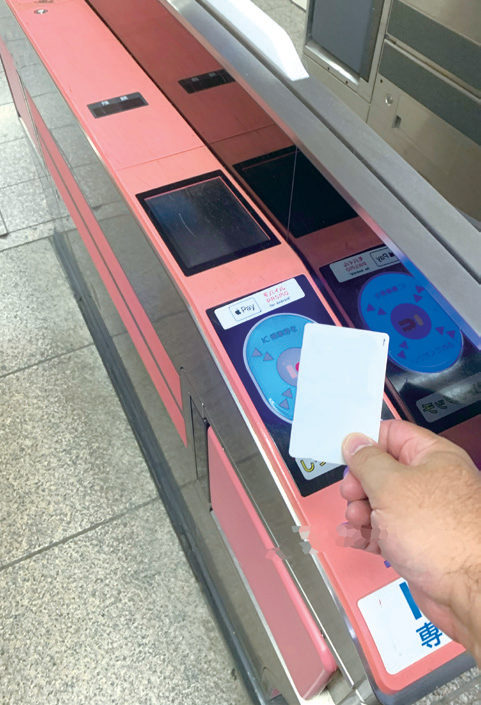
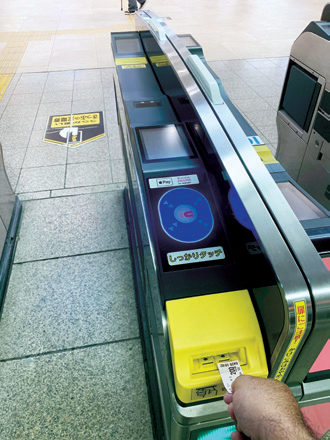
改札を入るとき、カードを自動改札機にタッチする。
When entering, tap the card at the automatic ticket gate.
3
改札を出るとき、もういちどカードを自動改札機にタッチする(料金が自動的に引かれる)。
When exiting, tap the card again at the automatic ticket gate. (The fare will be charged automatically.)
電車の乗り方(切符を買う場合)Taking a train (buying a ticket)
たまにしか電車に乗らない場合や、旅行先で電車に乗るときなどは、切符を買って乗ります。
You can buy a ticket for each trip if you don't take the train much, or when you are travelling somewhere.
1
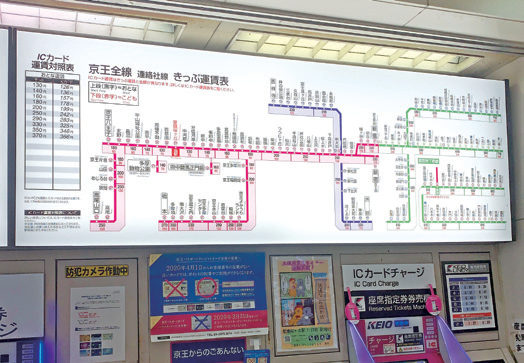
駅にある「運賃表」で、行きたい駅までの運賃を確認する。
Check the fare for your destination by looking at the 運賃表 (fare table) at the station.
2
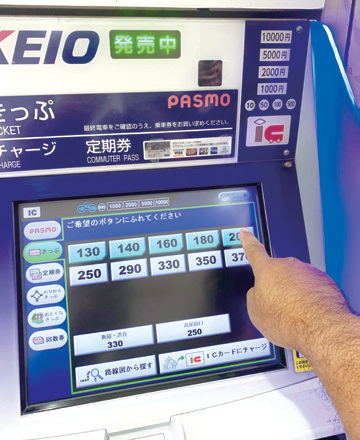
値段がわかったら、自動券売機にお金を入れ、その値段の切符を買う。
Once you know the fare, pay cash into the automatic ticket machine and buy a ticket for that price.
3
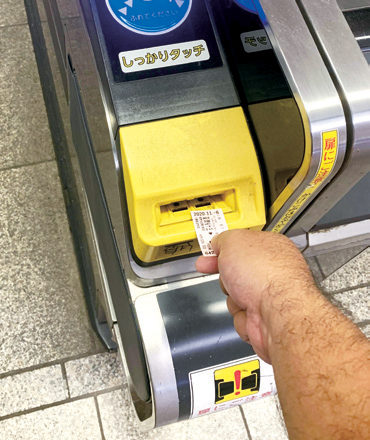
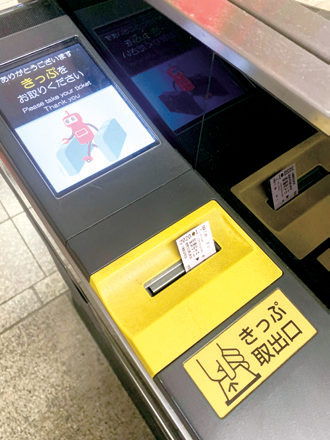
改札を入るとき、自動改札機に切符を入れる。改札機の反対側から切符が出てくるので、それを取る。
To enter, put the ticket into the automatic ticket gate. Take the ticket when it comes out the other side of the gate.
4
改札を出るとき、自動改札機に切符を入れて出る。切符は改札機に回収される。
To exit, put the ticket into the automatic ticket gate. The ticket will be collected by the gate.
精算のし方How to adjust the fare
降りる駅で「精算」をする方法もあります。
Alternatively, you can do 精算 (fare adjustment) at your destination.
1
乗る駅の自動券売機で、いちばん安い切符を買って改札を入る。
Buy the cheapest ticket through the automatic ticket machine at the station, then enter through the ticket gate.
2
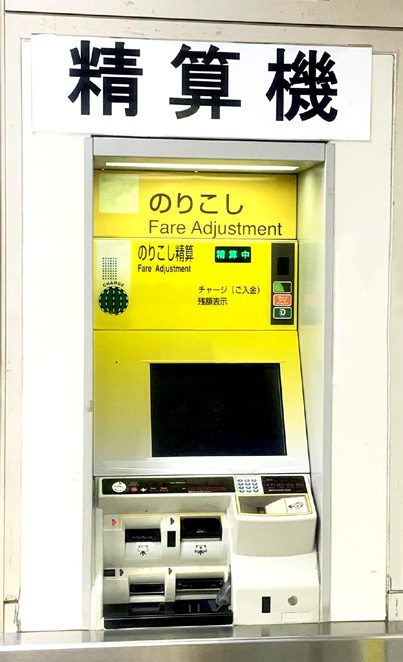
降りた駅で、改札を出る前に、改札の横にある「精算機」に行く。
At your destination, go to the 精算機 (fare adjustment machine) next to the ticket gate before you exit.
3
買った切符を自動精算機に入れる。不足額が計算されるので、お金を入れる。
Insert your ticket into the fare adjustment machine. It will calculate the fare difference. Pay cash into the machine.
4
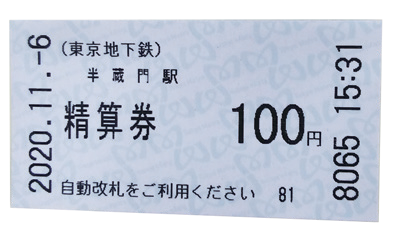
精算券を取る。
Collect the fare adjustment ticket.
5
改札を出るとき、自動改札機に精算券を入れて出る。
To exit, insert the fare adjustment ticket into the automatic ticket gate.
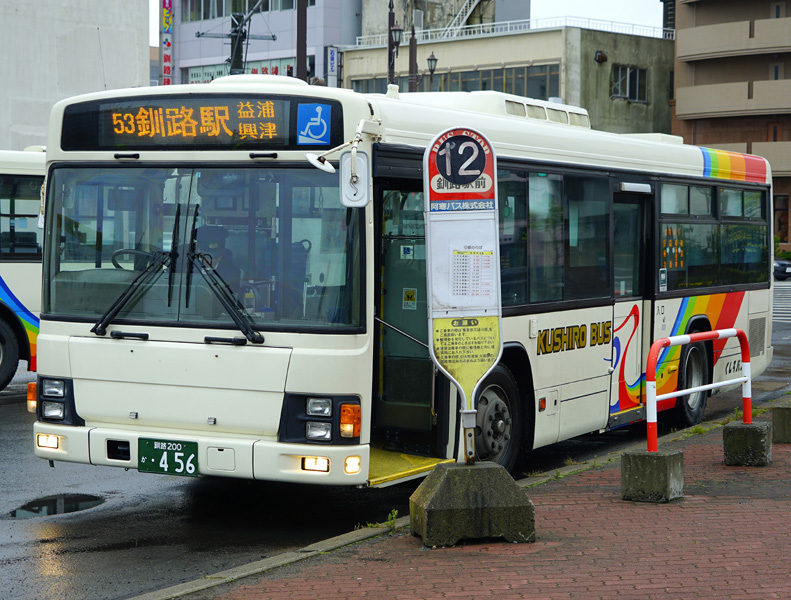
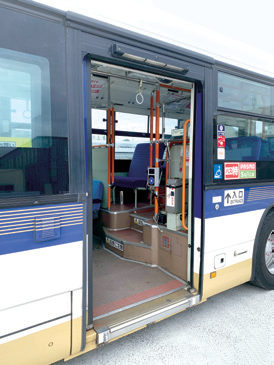
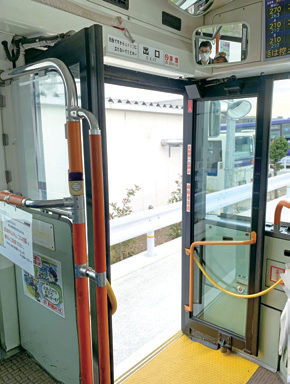
When taking a bus, you have to check if the bus fare is a flat rate, or if it changes based on the zone or distance. Buses have doors at the front and back for getting on and off. Depending on the region or bus route, different doors may be used for getting on and off the bus. Here are some typical examples.
乗った区間や距離によって運賃が異なる場合で、後ろ乗り、前降りのバスTaking a bus with fares based on the zone or distance; getting on from the back and off from the front
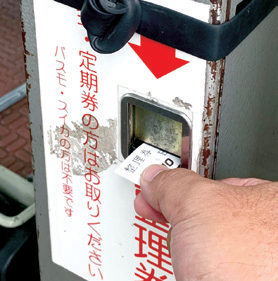
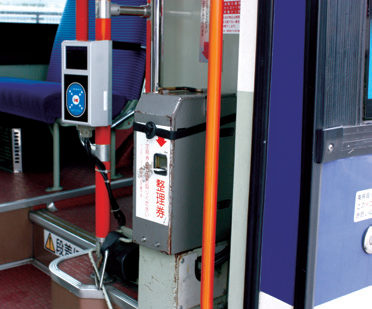
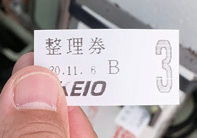
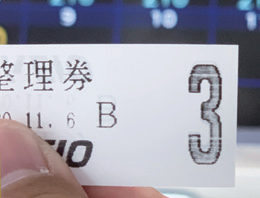
When you get on the bus, collect a 整理券 (numbered ticket). A number is printed on this ticket, so remember it. If you are using a prepaid card, tap the card on the machine when you get on.
3
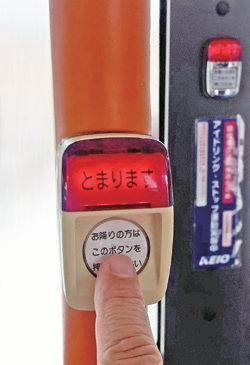
降りるバス停がアナウンスされたら、降車ボタンを押して知らせます。
When you hear the announcement for the bus stop where you wish to get off, press the button to let the driver know.
4
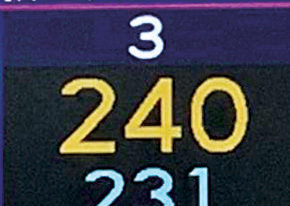
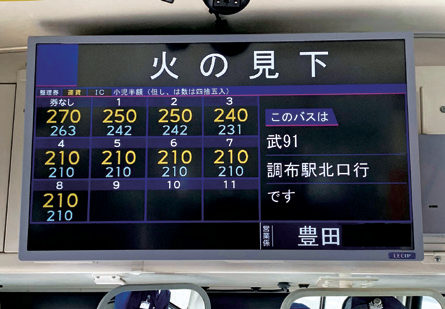
バスの前にある運賃表示機を見ます。整理券の番号と同じ数字のところに書いてある金額が、払う料金です。
There is a fare display board at the front of the bus with numbers. Pay the amount shown for the number on your ticket.
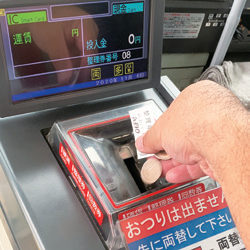
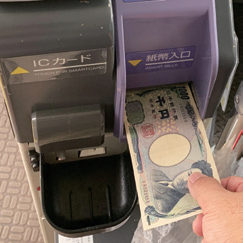
Put the cash and the numbered ticket into the machine next to the driver. If you do not have the exact change, put the money into the money changer. It will give you small change. (For example, if you put in a 1,000-yen bill, you will get back one 500-yen coin, four 100-yen coins, one 50-yen coin, and five 10-yen coins.) Using this small change, put the exact amount of your fare into the machine. If you are using a prepaid card, tap the card on the machine here.
6
前の扉からバスを降ります。
Get off the bus from the front door.
均一料金で、前乗り、後ろ降りのバスTaking a bus with a flat rate; getting on from the front and off from the back
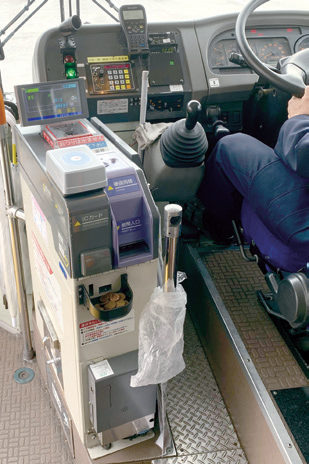
Pay the fare when you get on the bus. Put the cash into the machine next to the driver. If you do not have the exact change, put an amount higher than the fare into the machine. The machine will automatically give you your change. If you are using a prepaid card, tap the card on this machine.
3
降りるバス停がアナウンスされたら、降車ボタンを押して知らせます。
When you hear the announcement for your bus stop, press the button to let the driver know.
4
後ろの扉から降ります。このときは特に何もする必要はありません。
Get off the bus from the back door. You do not have to do anything before getting off.
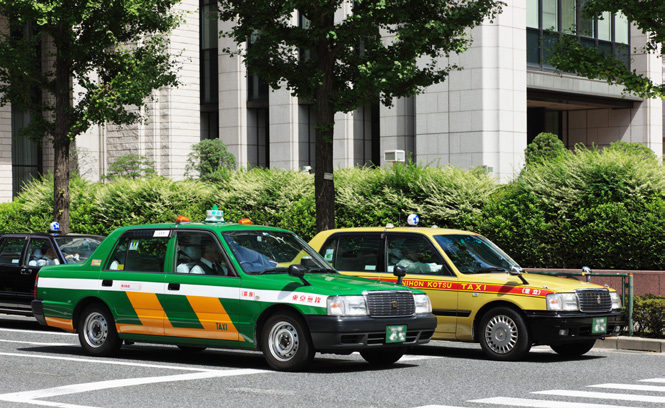
Taxis are more expensive than buses. However, in regions with very few public transport options, you might take a taxi. Here is how to take one in Japan.
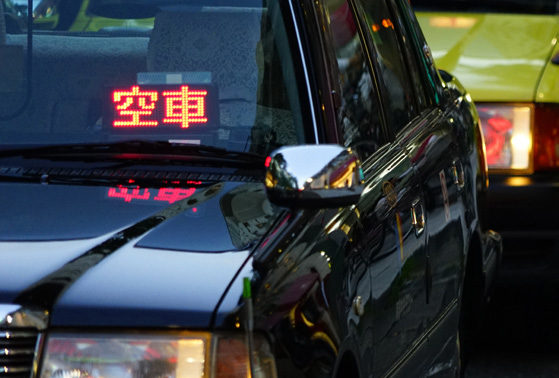
Get a taxi. There are a few ways to do this. You can walk along the road and catch a taxi, go to a taxi stand, call for one using an app, or call for one on the phone. If you want to catch a taxi on the road, look at the sign above the front passenger seat. If it is red and says 空車, it means that there are no passengers in the taxi and it is available. Raise your hand to catch it.
Get on the taxi. Taxis in Japan have automatic doors. Do not touch the doors. Instead, let the driver open and shut it. The passenger sits in the back. When there are more passengers, one can also sit in the front. However, the front seat of a taxi is not usually used.
Tell the driver where you want to go. If it is a well-known location, they will usually know where it is. If it is not, tell them the address and they will look it up on the navigation system.
When you reach your destination, pay the fare on the meter. If you have called for the taxi using an app, there may be an additional pick-up charge. There are also other charges if you have travelled on a toll road or if you are taking the taxi late at night. You can pay by cash. Sometimes, you can also pay by credit card, prepaid transportation card, or electronically through an app. The payment methods depend on the taxi. You do not have to pay any tip at all.