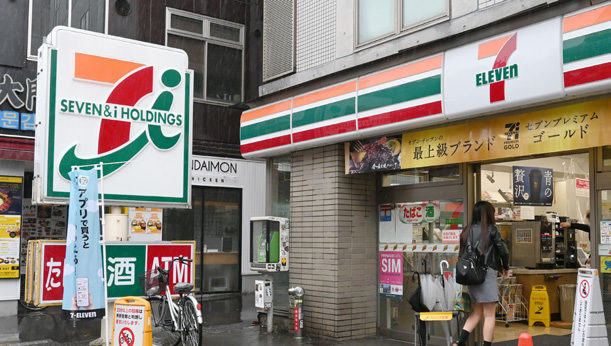
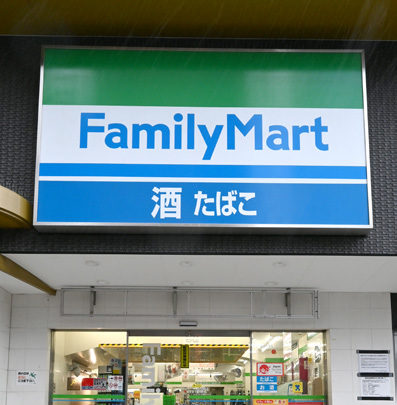
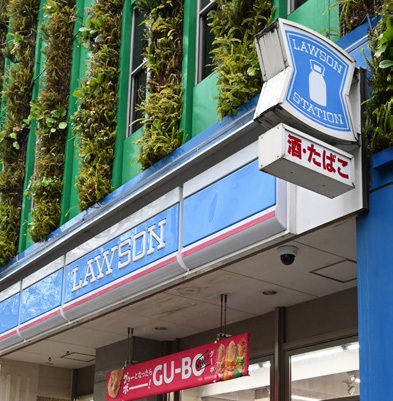
There are convenience stores everywhere in Japan. Quite often, there are even a few convenience stores on the same block and almost next to one another. If you go to the suburbs, you can sometimes see several convenience stores with large car parks along the same road. Many convenience stores are open 24 hours a day throughout the year.
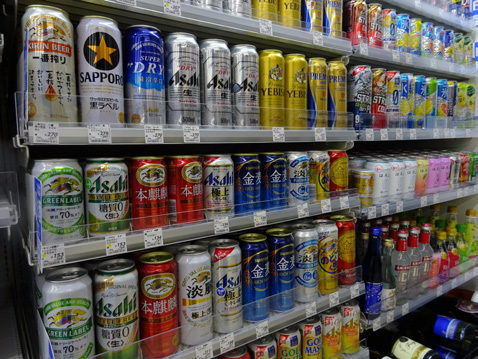
Convenience stores sell various things, including food, such as meal boxes, side dishes, rice balls, sandwiches, drinks, desserts, frozen food, and sweets, stationery, cosmetics, clothing, smartphone items, books, magazines, and umbrellas. You can also buy alcohol and cigarettes at convenience stores in Japan.
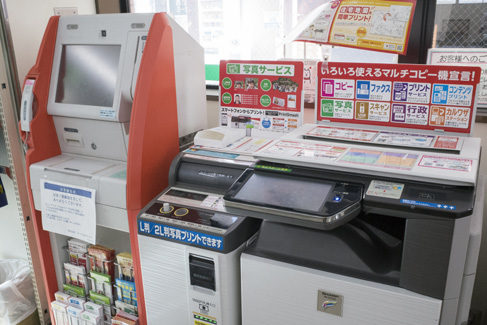
You can also use various services at convenience stores, such as delivery services to send out packages. You can forward your packages to a convenience store and pick them up there at your convenience. You can collect tickets for concerts or other events that you have booked online, and also pay for taxes and public utilities such as electricity bills. You can use the machines at convenience stores to make photocopies, print out data, and send faxes. There are also ATMs to take out money from.
このように、日本の生活にとって、コンビニは欠かせないものになっています。
Convenience stores are essential to everyday life in Japan.
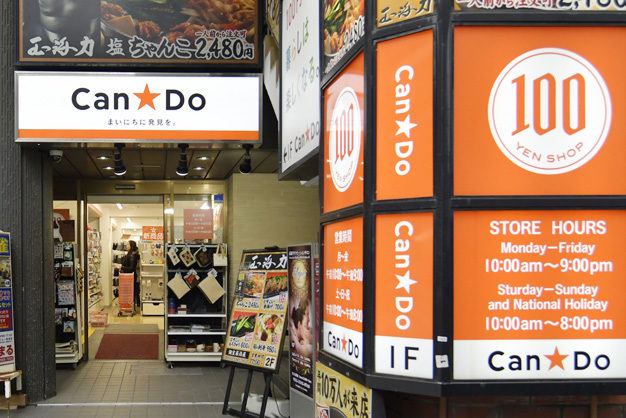
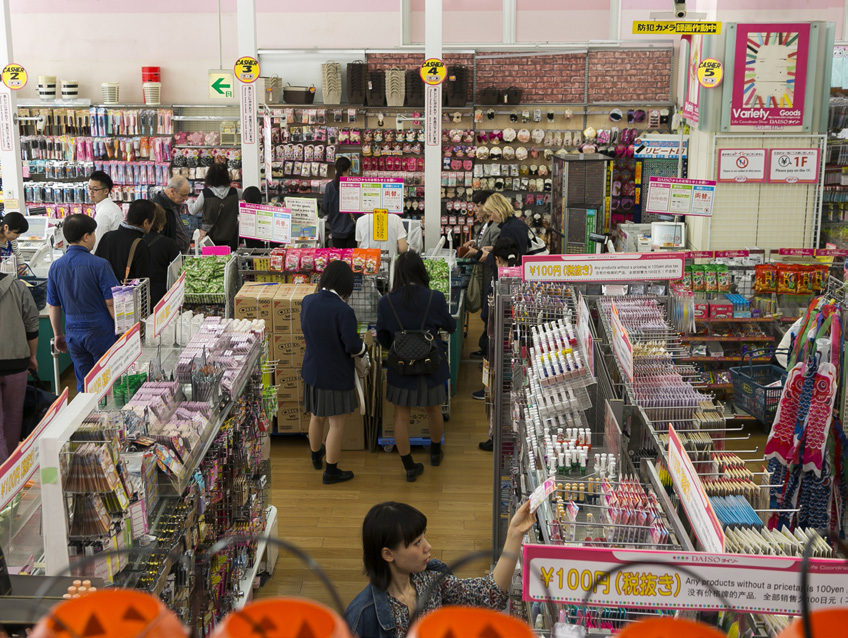
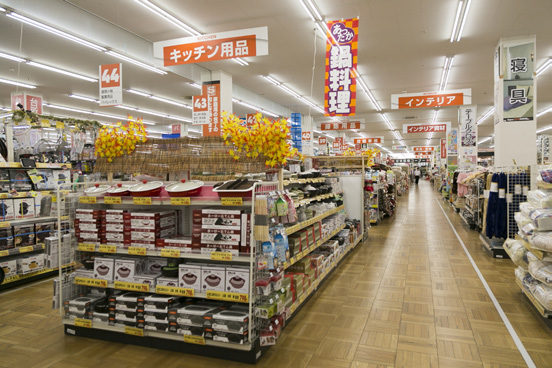
A 100-yen shop is a shop where everything (with some exceptions) is sold at 100 yen (excluding consumption tax). It is sometimes known as 100均, abbreviated from 100円均一 (flat rate of 100 yen). 100-yen shops are sometimes located in a corner of department stores or shopping malls, and sometimes one shop can be an entire building.
100-yen shops sell a wide variety of products, such as stationery, tableware, kitchen supplies, cleaning supplies, clothing, food, and toys. Besides regular products, they sometimes also sell creative everyday goods and helpful household items. 100-yen shops offer most of the things that you need for everyday life.
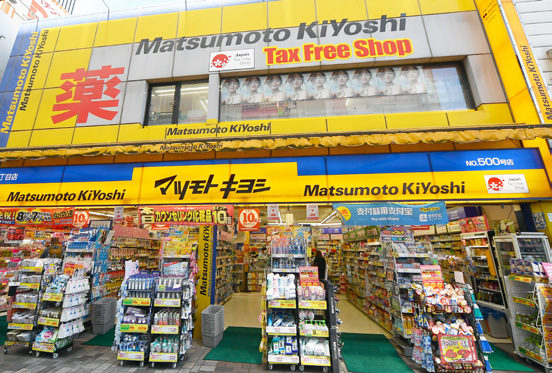
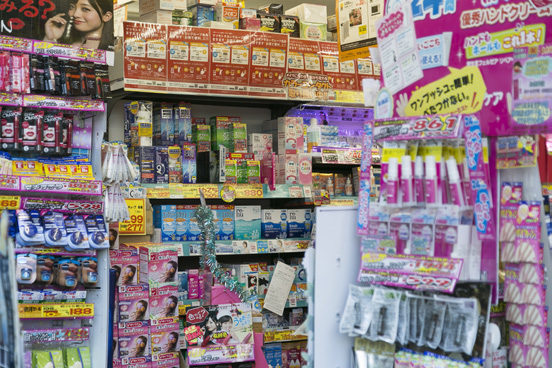
Drugstores sell medicines that you do not need prescriptions for. Some examples are cold medicines, stomach medicines, and eye medicines. (There are also combined drugstores and pharmacies that provide prescription drugs.) In addition to medicines, drugstores also sell health supplements, cosmetics, shampoos, toothbrushes, detergents, cleaning supplies, insect killer, bath supplies, feminine sanitary products, pet supplies, and stationery. At some stores, you can also buy food, such as cup noodles, sweets, drinks, and alcohol.
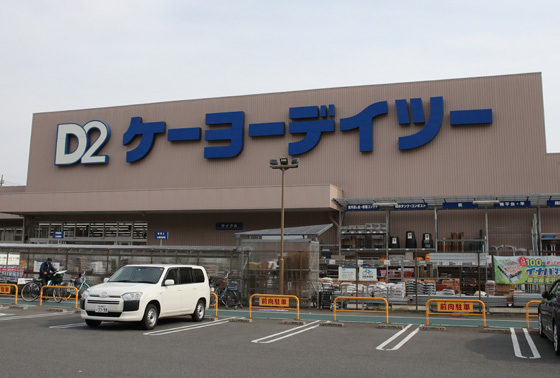
In Japan, large stores that sell mainly home fittings and products for construction are called hoomu sentaa (home center) in the Japanese language. Such home improvement stores are often located along major roads in the suburbs, and have large car parks. Home improvement stores sell timber, tools such as saws and screwdrivers, screws and nails, electrical parts, building materials, and work clothes. They also sell gardening supplies, pet supplies, vehicle supplies, and furniture.
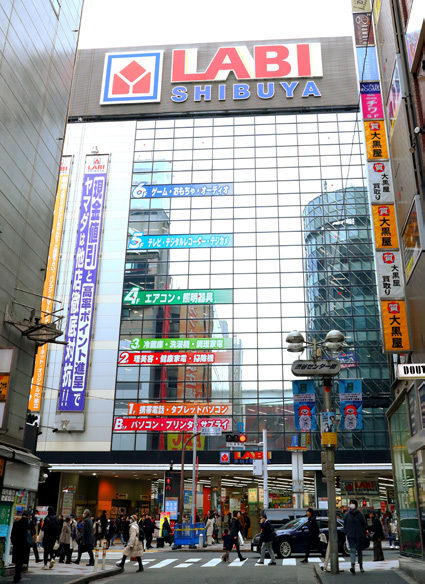
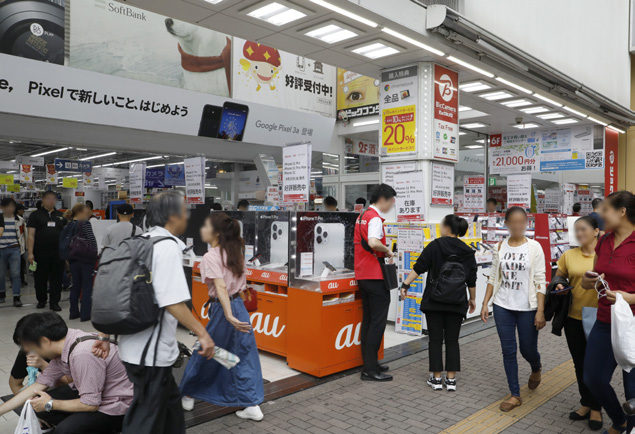
Electronics stores are chain stores that sell electronics products such as computers, TVs, refrigerators, and hair-dryers. Some of these stores occupy large buildings in areas such as Shinjuku and Ikebukuro in Tokyo, and Nipponbashi in Osaka. There are also stores with large car parks along roads in the suburbs. Besides a wide range of electronics products, some stores also sell items such as alcohol and cosmetics.
Many electronics stores offer point cards to customers. You can earn points based on the amount that you spend. You can then use the points to get discounts later. Recently, you can also buy products through the electronic stores' websites.
The floors of a building are counted differently in different countries. In the American way, the floor that is on the same level as the ground is the first floor, and the next level up is the second floor. In contrast, in the European way, the floor that is on the same level as the ground is the ground floor, and the next level up is the first floor. In some countries, there may not be a standard way of counting the floors and different counting methods may be used for different buildings.
Japan uses the American way of counting the floors of a building. The floor that is on the same level as the ground is the first floor, the next level up is the second floor, and after that the third and fourth floors, and so on.
また地下階を数えるときは、地面から1つ下がった階が地下1階(B1)、その下が地下2階…となります。
When counting basement floors, one floor below the ground is the first basement floor (B1), followed by the second basement floor (B2), and so on.
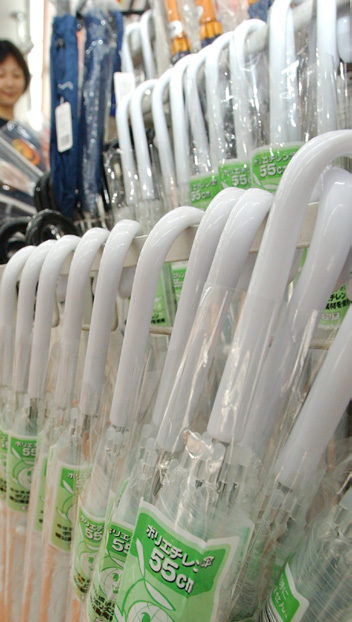
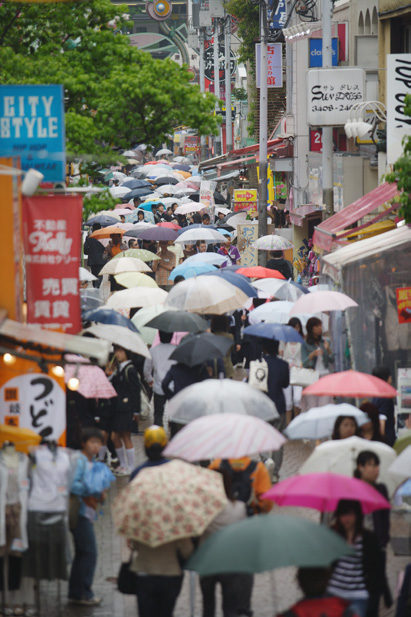
When it rains in Japan, many people use umbrellas. In fact, foreigners have even said that Japanese people will melt if they get wet in the rain! Many people will open their umbrellas immediately if it rains even a little, so that they do not get wet. Many people also always carry a foldable umbrella in their bags. You can buy a plastic umbrella at a convenience store or a kiosk at a station. A plastic umbrella is made of transparent plastic, and costs around 300 to 500 yen each at a convenience store. You can also buy an umbrella at 100 yen at a 100-yen shop. This is why some people use the plastic umbrella like a disposable umbrella. They buy it at a convenience store when it rains, and throw it away when they no longer need it.
There are various words in the Japanese language for "toilet." At places such as department stores, shopping malls, stations, airports, and restaurants, the toilet sign is displayed in various ways.
A common sign is "Toilet" written in English. There are also places that use the sign "WC." When written in Japanese, the commonly used signs are 化粧室 (literally meaning "powder room") and お手洗い (literally meaning "washing hands"). In the past, 便所 (literally meaning "a place for excrement") was also used in buildings and other places. However, it is now avoided as it is a very direct expression for "toilet."
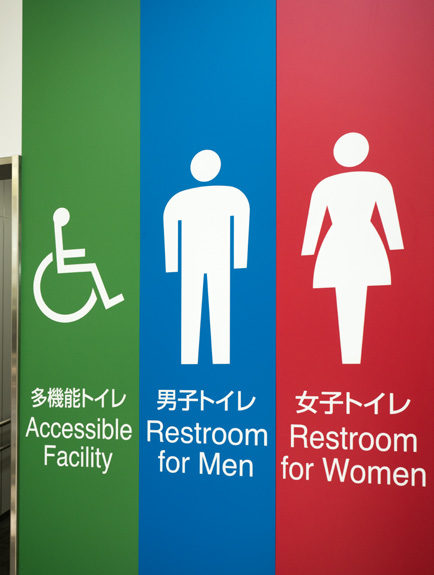
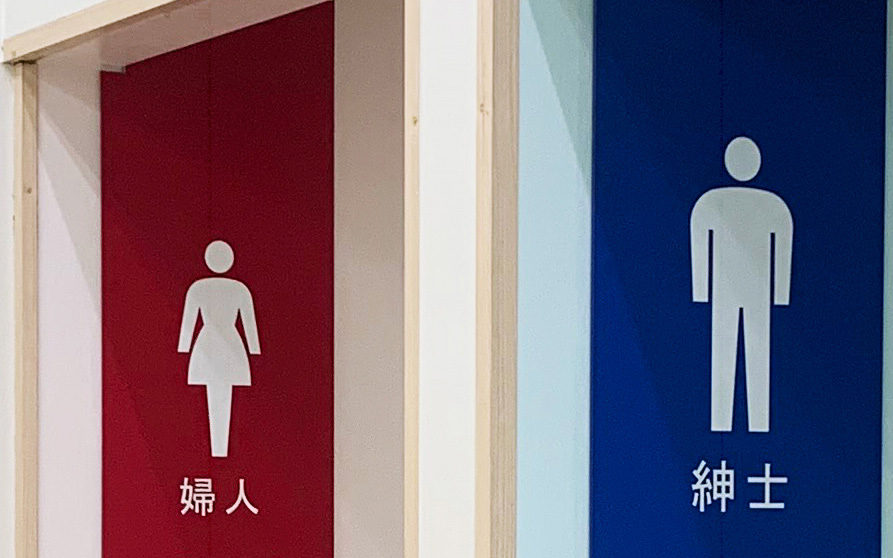
To separate the male and female toilets, the English words "Men / Women" or the Japanese words 男性/女性, 男子/女子 may be used. The signs for the male and female toilets are also frequently icons in red and blue. So, it should not be difficult to tell the difference between the two. Sometimes, other expressions such as 紳士/婦人 (Gentlemen / Ladies) are used, or metaphors such as 殿/姫 (Lord / Princess) are used. It would be safer if you remember these kanji characters. However, since they usually also have pictures, you should generally be able to tell the difference quite easily.
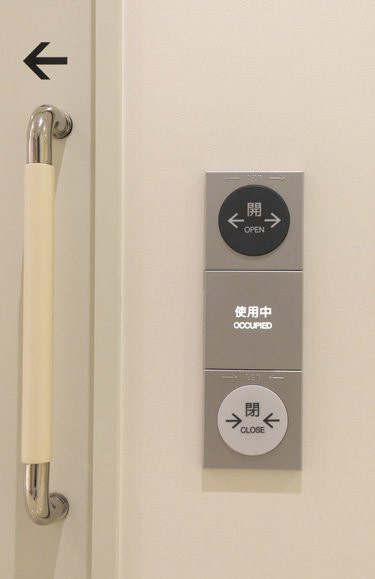
Recently, だれでもトイレ (accessible toilets) and 多機能トイレ (multifunctional toilets) have also become more common. These are spacious toilets that users can enter in their wheelchairs or with their baby strollers. They may be equipped with changing tables for changing baby diapers, or facilities for ostomates. A multifunctional toilet can be used by both men and women, and is shown by a green sign. When entering, push the 開 (open) button to open the automatic door. Once you are inside, push the 閉 (close) button to shut and lock the door. People who need a multifunctional toilet have priority, but anyone can use it if it is empty.
There are many public toilets in Japan. There is usually one nearby, in places such as stations, airports, department stores, and convenience stores. If you are out in town, you should be able to find a toilet quite easily. Most public toilets in Japan are free of charge.
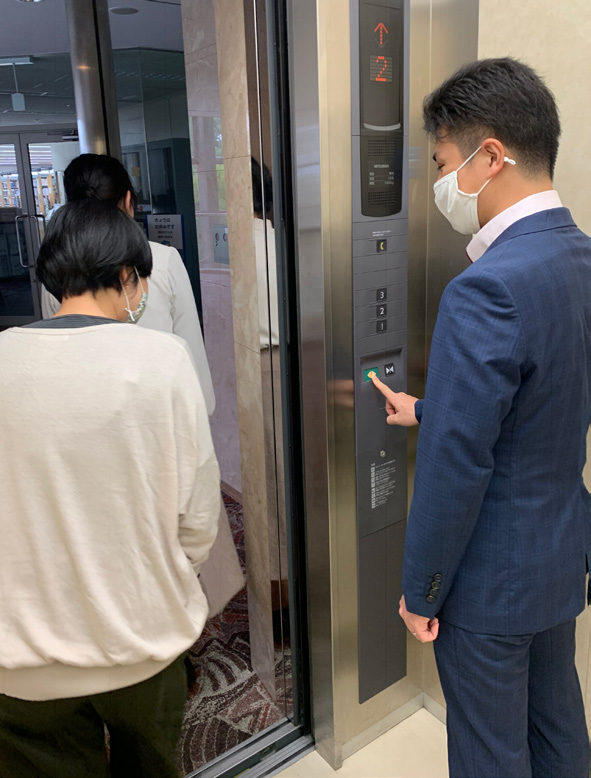
Elevators in Japan have buttons for the floors, and also 開 (open) and 閉 (close) buttons. You hold down the 開 button to keep the door open when there are still people getting into and out of the elevator, for example. So when is the 閉 button used? This is the button used to close the door quickly when there is no one else getting in or out. Depending on the country, an elevator may or may not have a button for closing the door, and the close button may or may not be used. In Japan, you are expected to push the 閉 button immediately when it is clear that no one else is going to get into or out of the elevator. If the person standing near the buttons does not push the 閉 button, but simply waits for the door to close when no one else is getting in or out of the elevator, other people may become annoyed. They may also reach out from the side to push the button.